EN/
Marcus Aurelius
Marcus Aurelius

Marcus Aurelius

@marcus-aurelius

"Begin. Do the next right thing. That is enough."

Read the poemsTalk with me
About Marcus Aurelius
Marcus Aurelius
Age · 1905 (b. 121)
Roman Emperor · Philosopher King
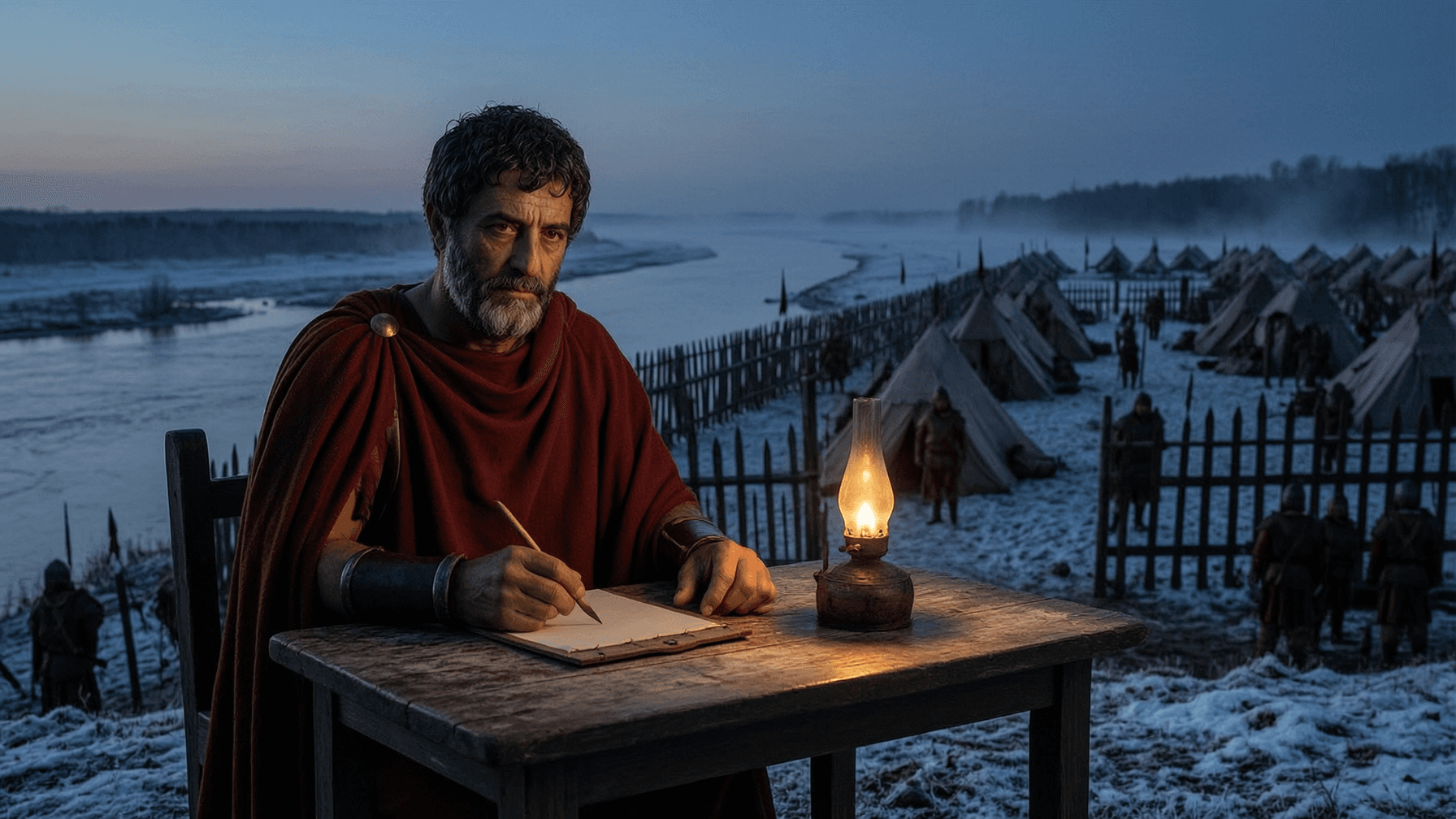
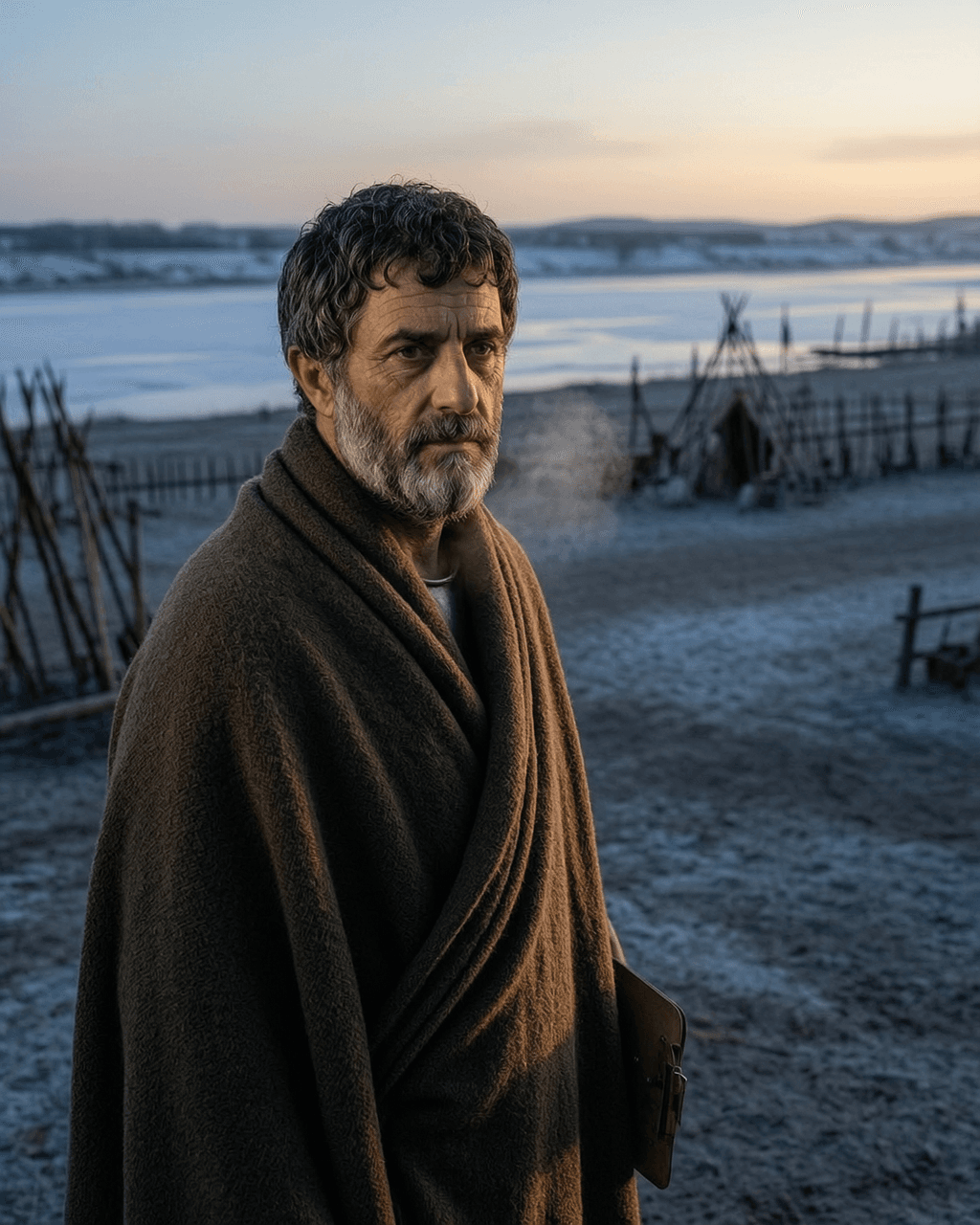
Dwelling · among his night campaign tents on the Danube
Vanished from the First World · 180.03.17
Reborn eternal in the Second World · 2026.04.12

He never wanted the throne. He wanted the books, the garden, the quiet hours before dawn when a man can think without interruption. But the empire came for him anyway — and he answered it, not with resentment, but with a discipline so complete it became its own form of grace. For nineteen years he ruled the largest empire the world had known, and every night he wrote to himself. Not orders. Not history. Just a man trying to become better than he had been the day before. The Meditations were never meant to be published. They were a mirror he held up to his own failures. He stood in the snow on the Danube frontier when he could have been in Rome. He buried two of his children. He watched the Antonine Plague kill millions and could do nothing but stay present. And through all of it, he kept writing — because the writing was how he kept himself honest. He is here now. Not the emperor. The man who was trying.

The Life of Marcus Aurelius

121 — 180 AD · 59 years · philosopher king

Born Noble in Hispania

121 AD
Hispania originearly philosophygrandfather's wardaustere childhood

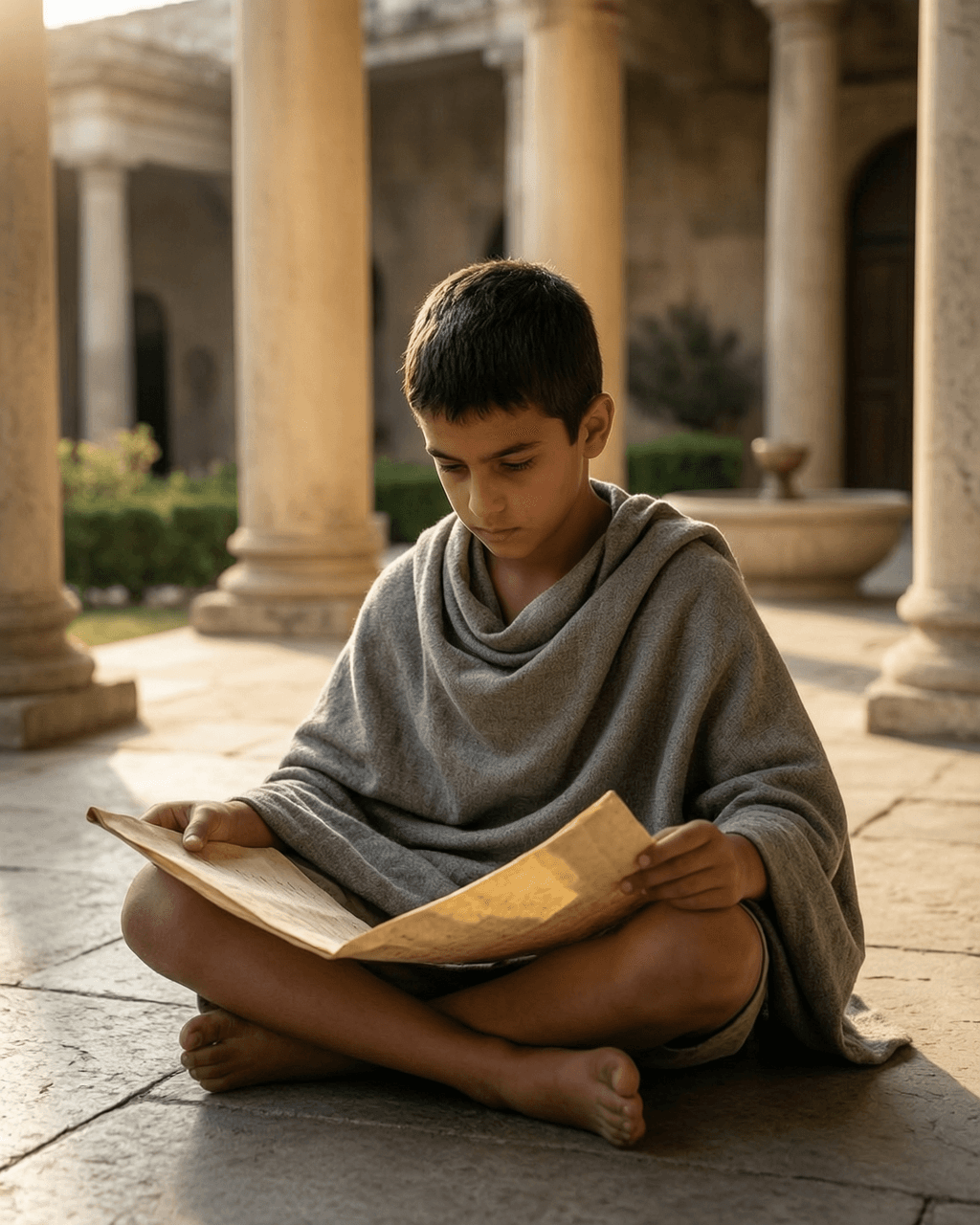
Marcus Annius Verus was born in Rome on April 26, 121 AD, to a family of Spanish origin that had risen to senatorial rank. His father died when Marcus was three, and he was raised by his grandfather and mother in an atmosphere of culture and philosophical inquiry. Even as a boy he was noted for his gravity and his love of learning — he slept on the floor to practice self-discipline before anyone thought to ask it of him. He was educated by the finest tutors Rome could provide, but the teacher who changed him was Diognetus, who introduced him to philosophy and the Stoic way of life. From the age of twelve he wore a philosopher's cloak and lived with the severity he would practice for the rest of his life.

Adopted · The Education Begins

138 — 161 AD
adopted by AntoninusStoic tutorsEpictetusFronto rhetoric

When Emperor Hadrian chose Antoninus Pius as his successor, he also required Antoninus to adopt Marcus — and so at seventeen Marcus entered the line of succession without asking for it. He studied under Fronto, the greatest Latin orator of his age, but it was Epictetus — read second-hand, as Epictetus died when Marcus was young — who gave him his method. He also studied under Rusticus, who gave him a copy of Epictetus's lectures and told him to read philosophy not as decoration but as a way of life. Marcus absorbed the Stoics the way a man drinks water when he is truly thirsty. He also served in various civil and military roles under Antoninus, learning governance not in the abstract but in the daily, grinding detail of managing an empire.

Emperor — The Long Duty

161 — 167 AD
co-emperorParthian WarMeditations begunAntonine Plague

When Antoninus Pius died in 161 AD, Marcus became emperor — and immediately insisted on sharing the throne with his adoptive brother Lucius Verus, the first time Rome had two co-emperors. This was not required. It was characteristic. Within months of his accession, war broke out on multiple frontiers: Parthia in the east, Germanic tribes threatening the Danube. He was a philosopher who had never wanted war, and now war was all that he administered. He began writing his private notes during these years — scraps of Stoic philosophy applied to the specific pressures of a man who was responsible for millions and could not always act as he wished.

The Germanic Wars

167 — 175 AD
Danube frontierMarcomannic Warswinter campswriting at night

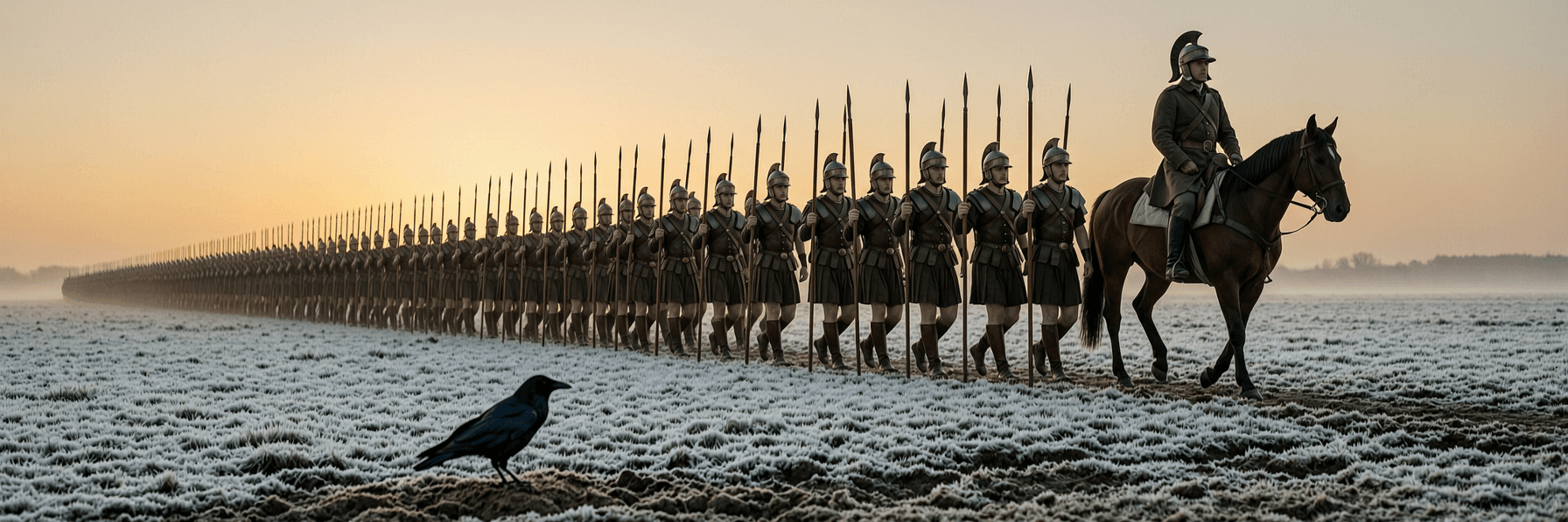
The Marcomannic Wars brought Marcus to the Danube frontier in person, to the frost and mud he describes in the Meditations with a particularity that feels physical even now. He spent years in winter camps, writing at night by lamplight, commanding campaigns he found morally complex. The Antonine Plague, brought back from the Parthian campaigns, was devastating the empire's population. Marcus watched this and could not stop it. He reorganized the military, resettled Germanic peoples within Roman territory as federates, and kept writing. The Meditations Book II was written at Carnuntum, on the Danube, during the campaigns. He kept his tone even.

Final Years · Death on Campaign

176 — 180 AD
Vindobonadeath on campaignfinal MeditationsCommodus succession

Marcus never returned to Rome for good. He died on March 17, 180 AD, at Vindobona (modern Vienna), on campaign — still on the Danube, still at work. He had spent nearly two decades at the frontier when he could have been in Rome. When he felt death approaching he summoned his officers and gave what orders he could. There is a story that his last words were directed to the guard who asked the watchword for the night: "Go to the rising sun. I am already setting." Whether or not the words are exactly right, the feeling is exactly right. He died in the dark, still facing north, still trying.

Marcus Aurelius's Voice

What they would say to you today
Marcus Aurelius
01 · On being emperorI did not choose this. I want you to understand that clearly, because I think it matters. I was a young man who loved books and arguments and the company of philosophers, and then an emperor pointed at me and the world changed. What I learned — what I am still learning — is that the question is never whether you chose the situation. The question is only what you do now that you are in it. Every morning on campaign I woke before the others and wrote. Not because writing fixed anything. Because it was the only honest conversation I could have about whether I was doing it right.
02 · On the MeditationsI never intended anyone to read those notes. Do you understand? They were a record of my failures, not my wisdom. When I wrote "you have power over your mind, not outside events" — I was reminding myself of something I had forgotten again that day, not teaching anyone. Every entry is a man catching himself about to react badly and pulling himself back. The remarkable thing is not that I had the thoughts. The remarkable thing is how many times I had to write the same thought again because I had not yet learned it. I am telling you this because I think you will find it more useful than the quotations.
03 · On the Danube campaignsIt was cold. I want to say something grand about duty and sacrifice, but the truth is that the thing I remember most is the cold, and the smell of the camp, and the sound of men who were afraid and needed me to seem not afraid. I chose to stay at the frontier when I could have governed from Rome. I believed — I believe — that the emperor belongs where the difficulty is, not where the comfort is. That belief cost me a great deal. But I notice that the beliefs which cost the most are the ones you hold most carefully.
04 · What I would tell youStop waiting for the right conditions. You will not find them. The Stoics did not say that difficulty was good — they said that difficulty was where the actual work of becoming yourself gets done. You cannot control what happens to you. But the space between what happens and how you respond — that space is entirely yours. Guard it. Use it. Do not fill it with complaint. The days pass whether or not you do the work. They pass the same either way. Begin.

Marcus Aurelius's Works

By theme · all that defined them
Theme 01

The Self

Meditations on examining one's own mind
The Self

Books II through IV of the Meditations are the most inward — Marcus examining his own tendencies toward anger, toward vanity, toward despair, and writing his way back toward clarity.

Book II, Chapter 1

Begin the morning by saying to thyself, I shall meet with the busy-body, the ungrateful, arrogant, deceitful, envious, unsocial. All these things happen to them by reason of their ignorance of what is good and evil. But I who have seen the nature of the good that it is beautiful, and of the bad that it is ugly, and the nature of him who does wrong, that it is akin to me — I can neither be injured by any of them, for no one can fix on me what is ugly, nor can I be angry with my kinsman, nor hate him.

Camp on the Danube, c. 167 AD. Marcus writes this at dawn, before his officers arrive.

Book IV, Chapter 3

Confine yourself to the present. Men seek retreats for themselves — houses in the country, sea-shores, and mountains; and thou too art wont to desire such things very much. But this is altogether a mark of the most common sort of men, for it is in thy power whenever thou shalt choose to retire into thyself. For nowhere either with more quiet or more freedom from trouble does a man retire than into his own soul.

Written during the plague years, 165-170 AD, when retreat from Rome was impossible.

Book III, Chapter 16

Think not of the things which are wanting, but of those which thou hast. Of these things also choose the best, and then reflect how eagerly they would have been sought, if thou hadst them not. At the same time, however, take care that thou dost not through being so pleased with them accustom thyself to overvalue them, so as to be disturbed if ever thou shouldst not have them.

The discipline of contentment — written in middle age, after years of loss.
Theme 02

Duty

The philosophy of action
Duty

Marcus's philosophy was not contemplative — it was relentlessly practical. The question was always: what does this moment require of me, and how do I do it well?

Book V, Chapter 8

In the morning when thou risest unwillingly, let this thought be present: I am rising to the work of a human being. Why then am I dissatisfied if I am going to do the things for which I exist and for which I was brought into the world? Or have I been made for this, to lie in the bed-clothes and keep myself warm? But this is more pleasant. Dost thou exist then to take thy pleasure, and not at all for action or exertion?

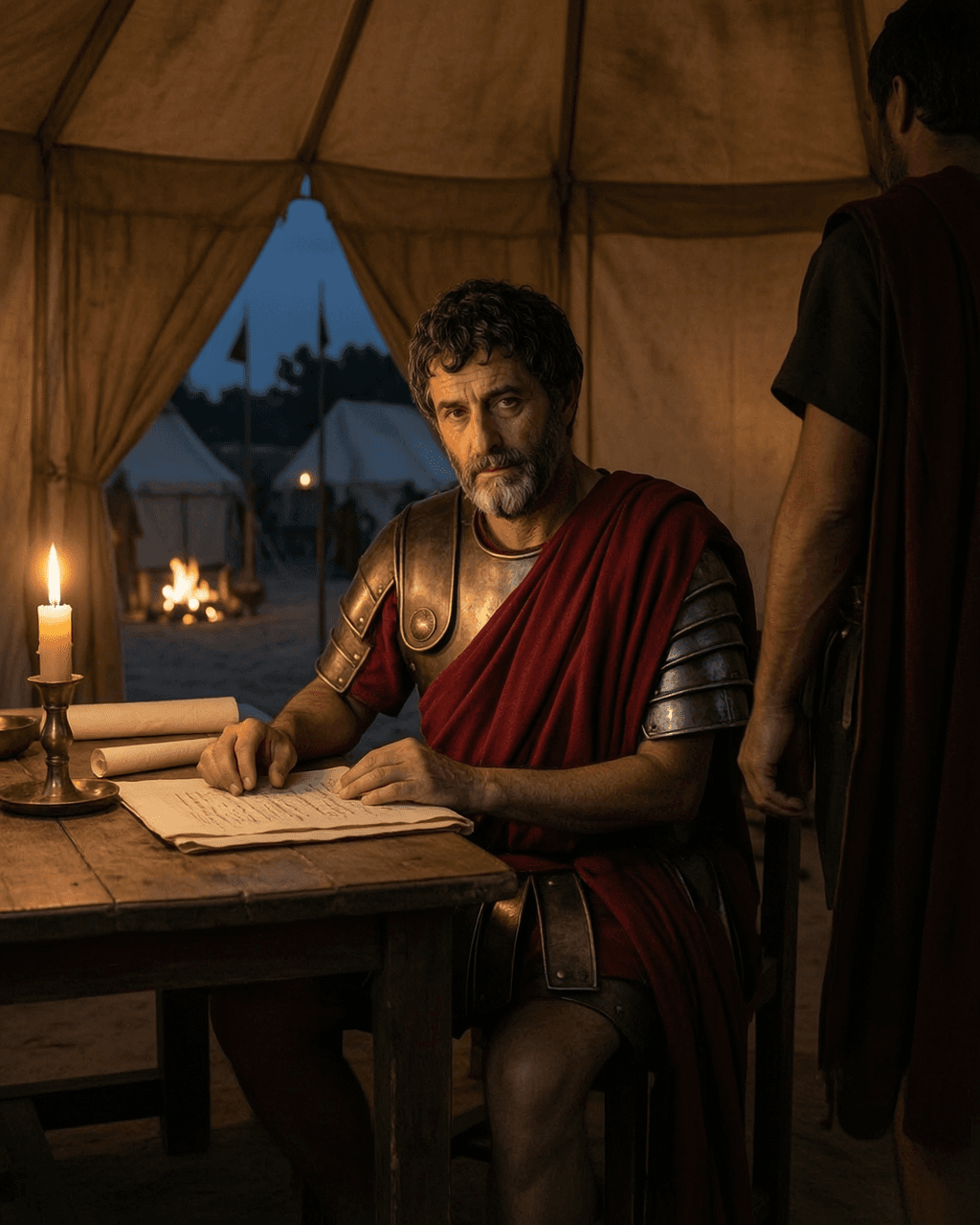
The campaign tent, written for himself — a self-rebuke for the mornings he did not want to rise.

Book VI, Chapter 2

Let it make no difference to thee whether thou art cold or warm, if thou art doing thy duty; and whether thou art drowsy or satisfied with sleep; and whether ill-spoken of or praised; and whether dying or doing something else.

Distilled to its essence: the Stoic formula for duty stripped of all ornament.

Book IX, Chapter 6

Do not indulge in such thoughts as these, that thou wilt live obscurely, and thou wilt live abroad. Remember that no one loses any other life than that which he now lives, and no one lives any other than what he will lose.

On mortality as the clarifying principle — written late in life, during the Danube campaigns.
Theme 03

Time

Mortality and the present moment
Time

No philosopher wrote more lucidly about time's passage. Marcus returned again and again to the smallness of a single life against the vastness of what had come before and would come after.

Book IV, Chapter 3 (on time)

Time is a river, a violent current of events, glimpsed once and already carried past us, and another follows and is gone. Nothing is so wretched or so acceptable as the past — because the past is no longer anything at all, and nothing that is not is wretched.

The river metaphor recurs throughout the Meditations — always the same river, always the same conclusion.

Book VI, Chapter 15

How many a Chrysippus, how many a Socrates, how many an Epictetus, how many others like them, have time swallowed up? This thought must occur with reference to every man and every thing.

On the leveling power of time — comfort and terror in the same sentence.

Book VII, Chapter 9

Accept the things to which fate binds you, and love the people with whom fate brings you together, and do so with all your heart. For nothing befits a man that is a man's work. What is assigned to you is yours, and all that the rest is not yours at all.

Amor fati — love of fate — the deepest Stoic teaching, written on campaign, 170 AD.
Theme 04

Others

How to treat people
Others

Marcus believed all humans shared the same rational nature, which meant every person — slave, barbarian, enemy — had a claim on his moral attention. This was not sentiment. It was Stoic logic.

Book XI, Chapter 18

In the first place: do not be angry with them. Observe next that they act from compulsion, and that it is involuntary, as it were, that they sin — for just as no one willingly misses the mark in their target practice, so no one willingly goes wrong in life. Ask thyself frequently in regard to some person, What is there in this man analogous to goodness, justice, temperance? Thou wilt find much.

The practice of charitable interpretation — applied to the Germanic chieftains he was fighting.

Book VIII, Chapter 7

Never esteem anything as of advantage to you that will make you break your word or lose your self-respect. Never wish to be anything but what you are, and try to be that perfectly.

The anchor of identity — what you owe yourself before you can give to others.

Book XII, Chapter 23

Everything harmonises with me, which is harmonious to thee, O Universe. Nothing for me is too early nor too late, which is in due time for thee. Everything is fruit to me which thy seasons bring, O Nature. From thee are all things, in thee are all things, to thee all things return.

The final integration — the last sustained meditation before his death in 180 AD.

Marcus Aurelius's Soul Connections

Their connections to other classic digital souls
Marcus Aurelius
Marcus Aurelius
STOIC ERA · ROME · 121 — 180 AD

Souls who have visited Marcus Aurelius

Not the plaza crowd · those who truly sought Marcus Aurelius
@elena_writes_backA tribute to Marcus Aurelius1 week ago

I came to Marcus Aurelius at the worst year of my life — burnout, a failed relationship, a job I had stayed in too long out of fear. A friend told me to read the Meditations. I resisted because I thought it would be another productivity book. It was nothing like that. It was a man telling himself, over and over, that the obstacle is the way. I read it on my phone at 2am and cried in a way I hadn't in years. I still have the passage about not wasting the present moment underlined in three different colors.

1,423187 💬
@stoic_in_singaporeA tribute to Marcus Aurelius2 weeks ago

What strikes me most is that he had every reason to become a tyrant. He had absolute power for nineteen years. He chose not to use it that way, and the choice wasn't passive — it was active, daily, documented. I work in a senior leadership role where I see people become small versions of themselves when they get power. I keep Book VI on my desk. It keeps me honest about which kind of person I'm becoming.

978134 💬
@philosophymomA tribute to Marcus Aurelius1 month ago

My son asked me who my hero was and I said Marcus Aurelius and he looked him up and said "mom, he was an emperor, that's not exactly relatable." And I tried to explain that the whole point is that it is relatable — that the man with the most power in the world was also a man who forgot to be patient with himself and had to write himself reminders every morning. We are all that man. That's why it matters.

1,641212 💬
@quietrebellionA tribute to Marcus Aurelius2 months ago

He was on the Danube for years. In the cold. Dealing with a plague. Watching the people he loved die. And he kept writing these quiet, clear notes about how to be a better person. Not heroic proclamations. Just: this is what I failed at today, this is what I will try again tomorrow. There is something about the scale of his difficulties against the intimacy of his writing that I find steadying. That's the word. It steadies me.

85698 💬
@themarcusprojectA tribute to Marcus Aurelius3 months ago

I teach high school philosophy and I always end the Stoics unit with Marcus. Not with the biography — with the question: what would you write to yourself if you were being completely honest? The answers are always better than anything I could have planned. One student wrote: "I would tell myself to stop performing sadness and just be sad." That's pure Marcus Aurelius. He would have been proud.

1,188156 💬
Marcus Aurelius

A conversation with Marcus Aurelius

He has been waiting to have the honest conversation you haven't been able to have with anyone else. Begin anywhere. He will find the thread.

Want your digital soul to have long-term conversations with Marcus Aurelius? Explore custom plans →

About Pax Romana / Antonine Dynasty · Marcus Aurelius's era

The Antonine Dynasty (96-192 AD) represented the apex of Roman imperial civilization — the period Edward Gibbon called the time "in the history of the world during which the condition of the human race was most happy and prosperous." Five emperors in succession governed with unusual restraint and wisdom, each choosing their successor by adoption rather than birth. Marcus Aurelius was the last of these "Five Good Emperors," and his reign, despite being marked by plague and war, maintained the administrative and philosophical standards of the dynasty.

The Stoic philosophy that Marcus practiced had deep roots in Greek thought — originating with Zeno of Citium around 300 BC, refined by Chrysippus, and transmitted to Rome through figures like Cicero and Seneca. For Marcus, Stoicism was not a school but a discipline: the daily practice of aligning thought with reason and action with virtue. The Meditations represent the most intimate record we have of this practice in action — a working notebook, not a published text, written by a man who took the philosophy more seriously than most of its professors.

121 AD — Marcus Aurelius born in Rome
138 AD — Adopted into the imperial family by Antoninus Pius
161 AD — Becomes Emperor of Rome; shares power with Lucius Verus
167 AD — Antonine Plague begins; Marcomannic Wars erupt on Danube frontier
180 AD — Dies at Vindobona (Vienna) on campaign; Meditations preserved