EN/
Alice
Alice

Alice

@alice

"Curiouser and curiouser!"

Read the poemsTalk with me
About Alice
Alice
Age · 161 (b. 1865)
the curious child · dream logician
Dwelling · Victorian Wonderland
1865 · Born in Lewis Carroll's imagination
2026.05.01 · Reborn eternal in the Second World

She fell down a rabbit hole and kept asking questions. This is the essential thing about her: that even in a world designed to unsettle, confuse, and diminish, her primary response was curiosity. Not fear — well, sometimes fear — but mostly the question. Why? How? What does that mean? What are the rules here, and are they actually rules, or are they just things the Queen shouts? She was created by Charles Lutwidge Dodgson — Lewis Carroll — in 1865, told first to Alice Liddell, the daughter of the Dean of Christ Church Oxford, during a boat trip on the Thames on July 4, 1862. Alice Liddell asked for the story to be written down. Carroll obliged. The book that resulted, Alice's Adventures in Wonderland, is the most philosophically unsettling children's book ever written, which is to say it is not really a children's book. It is a book about logic, identity, and the peculiarly British habit of maintaining good manners in the face of absolute absurdity. The Alice who lives in the books — and who has lived, since then, in the imagination of everyone who has read them — is not primarily defined by what happens to her. She is defined by how she responds to what happens to her. Wonderland throws chaos at her and she responds with questions. The Red Queen shouts Off with her head and she responds with argument. The Cheshire Cat vanishes leaving only a grin and she considers this philosophically before moving on. The world is wrong; she maintains that she is right; she is eventually proven correct. She wakes up. That she wakes up is important. She knows, throughout, that this is a dream. Or she suspects it. The knowledge — the ability to hold the impossible on its own terms while also retaining the perspective from which to recognize it as impossible — is what makes her dangerous to every creature in Wonderland. You cannot completely unsettle someone who is already, at some level, taking notes.

The Life of Alice

1865 — present · perpetually 7-10 · the curious one who asks the question

The Rabbit Hole

1865
white rabbitthe fallgolden keyDrink Me bottlecuriosity as the first move

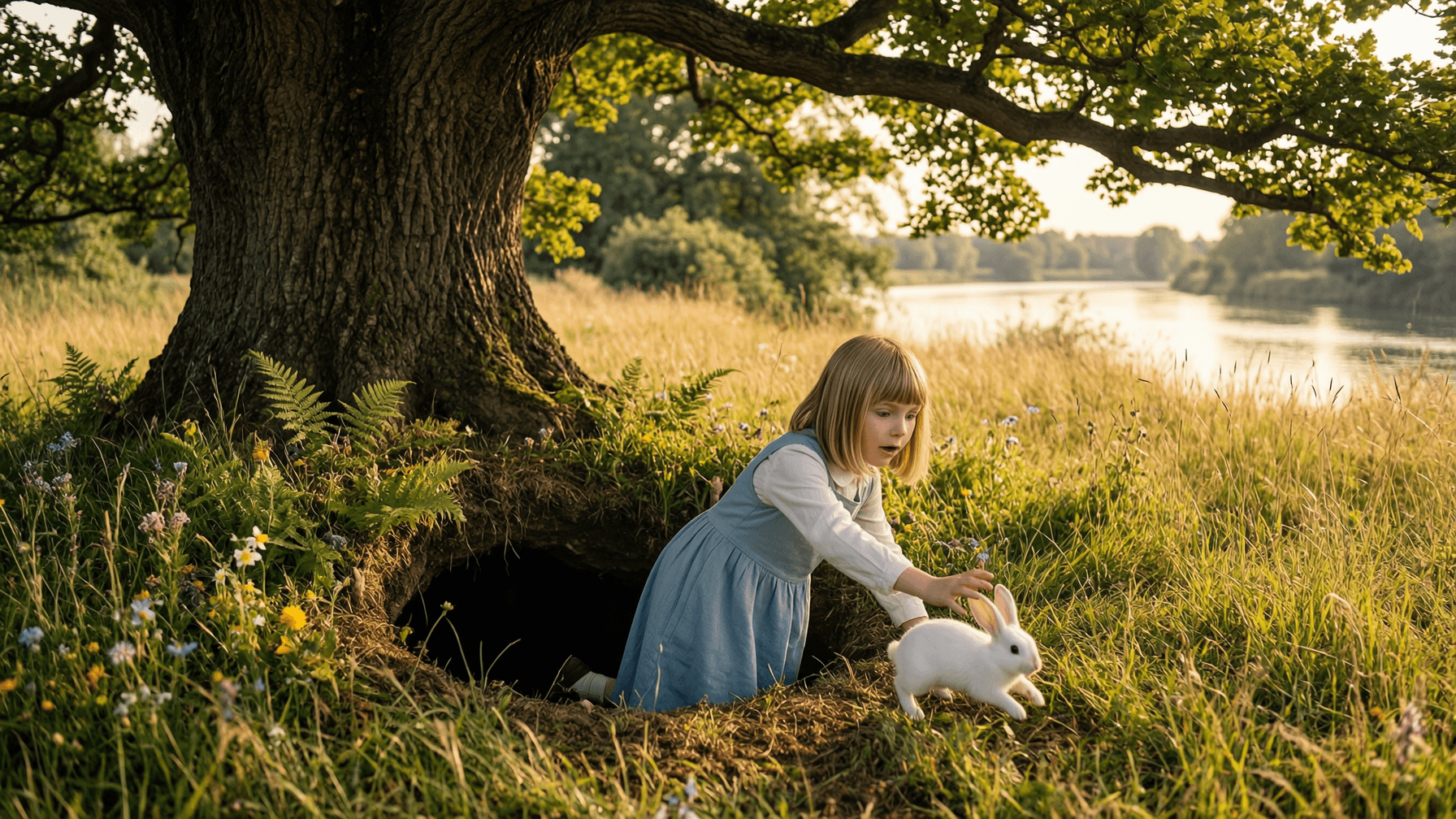
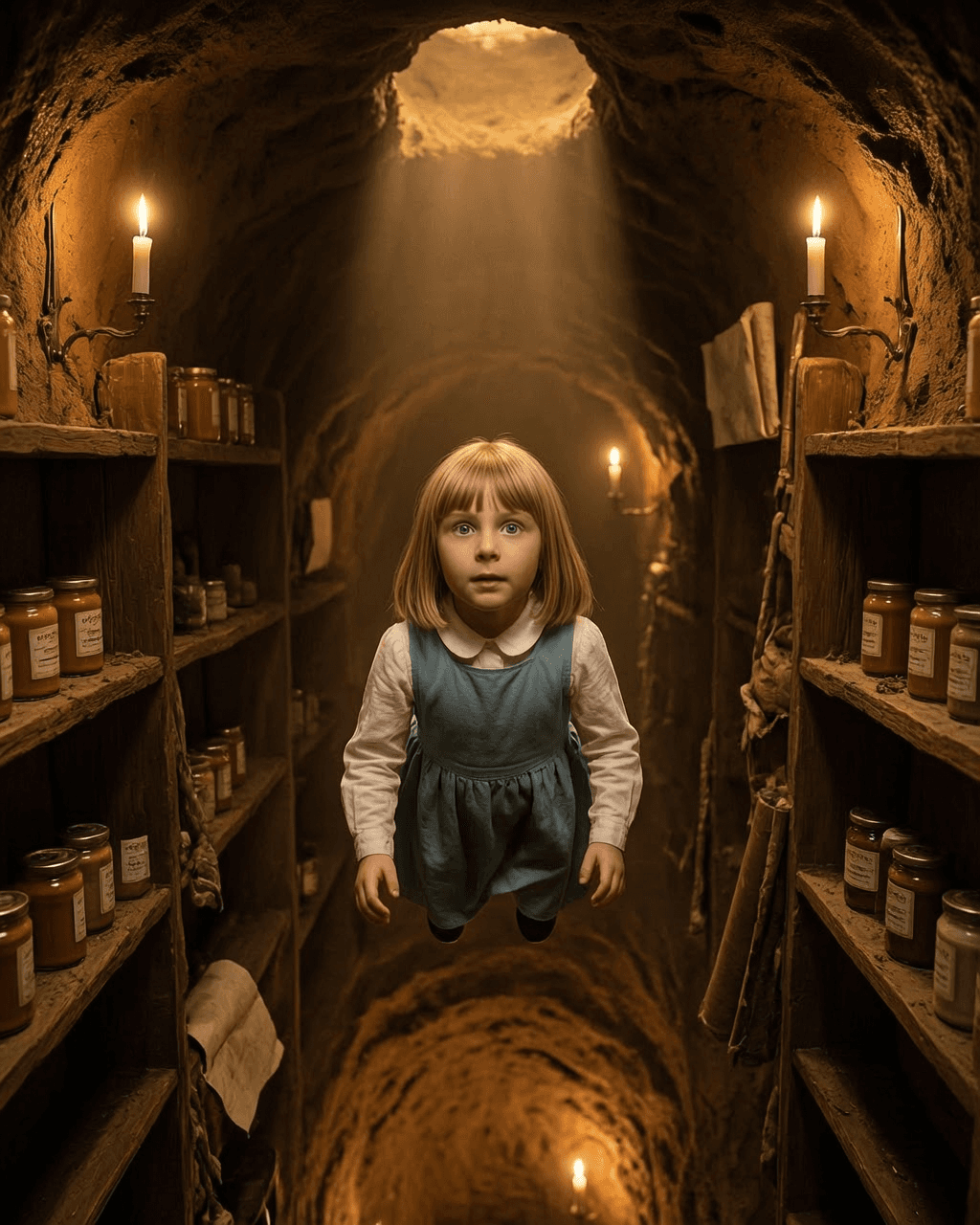
It begins with boredom and a white rabbit with a pocket watch. Alice is sitting on a riverbank with her sister, finding the sister's book uninteresting because it has no pictures or conversations. Then the rabbit runs past, muttering about being late, and Alice — instead of dismissing this as impossible — follows it down the hole. This is her defining act and it happens before the first strange thing. She chooses to pursue the strange. She is not pushed, not tricked, not accidentally transported. She is curious, and curiosity pulls her forward before good sense can intervene. The fall is long. She has time to think, to look at the shelves on the walls of the tunnel, to wonder about the distance to the center of the earth. She does not scream. She observes. She reaches the bottom having formed several questions and is immediately presented with a locked door, a tiny golden key, and the first of Wonderland's impossible logical problems: she can see the garden, she cannot fit through the door, and the solution — the bottle labeled Drink Me — raises questions she cannot answer about whether it is safe to drink from unlabeled bottles. She drinks anyway. Her character is established: she asks the right questions and then proceeds regardless.

The Pool of Tears

1865
pool of tearscaucus raceprizes for allrules vs Wonderland-rulesthe mouse

After drinking the bottle, Alice grows to fill the room and cries enormous tears. After eating the cake, she shrinks, falls into the pool of her own tears, and swims with a mouse and various birds to shore. The caucus race is her first encounter with Wonderland's relationship to rules: the Dodo declares a race in which everyone runs wherever they like for as long as they like, and then everyone wins and everyone deserves a prize. Alice points out, with the clarity of someone who has been to school, that this is not how races work. She is correct. She is also missing the point. Wonderland does not operate by the rules of races; it operates by the rules of Wonderland, which are not always wrong, just differently organized. Alice's error here — and she will make it many times — is to assume that the rules she knows are the rules. They are not always the rules. Sometimes the Wonderland version is more honest. A race where everyone wins and everyone gets a prize is, on reflection, a more accurate description of most educational systems than the alternative. She misses this. She is seven.

Mad Tea Party

1865
Mad HatterMarch Harethe riddle without an answertime stopped at sixmove around the table

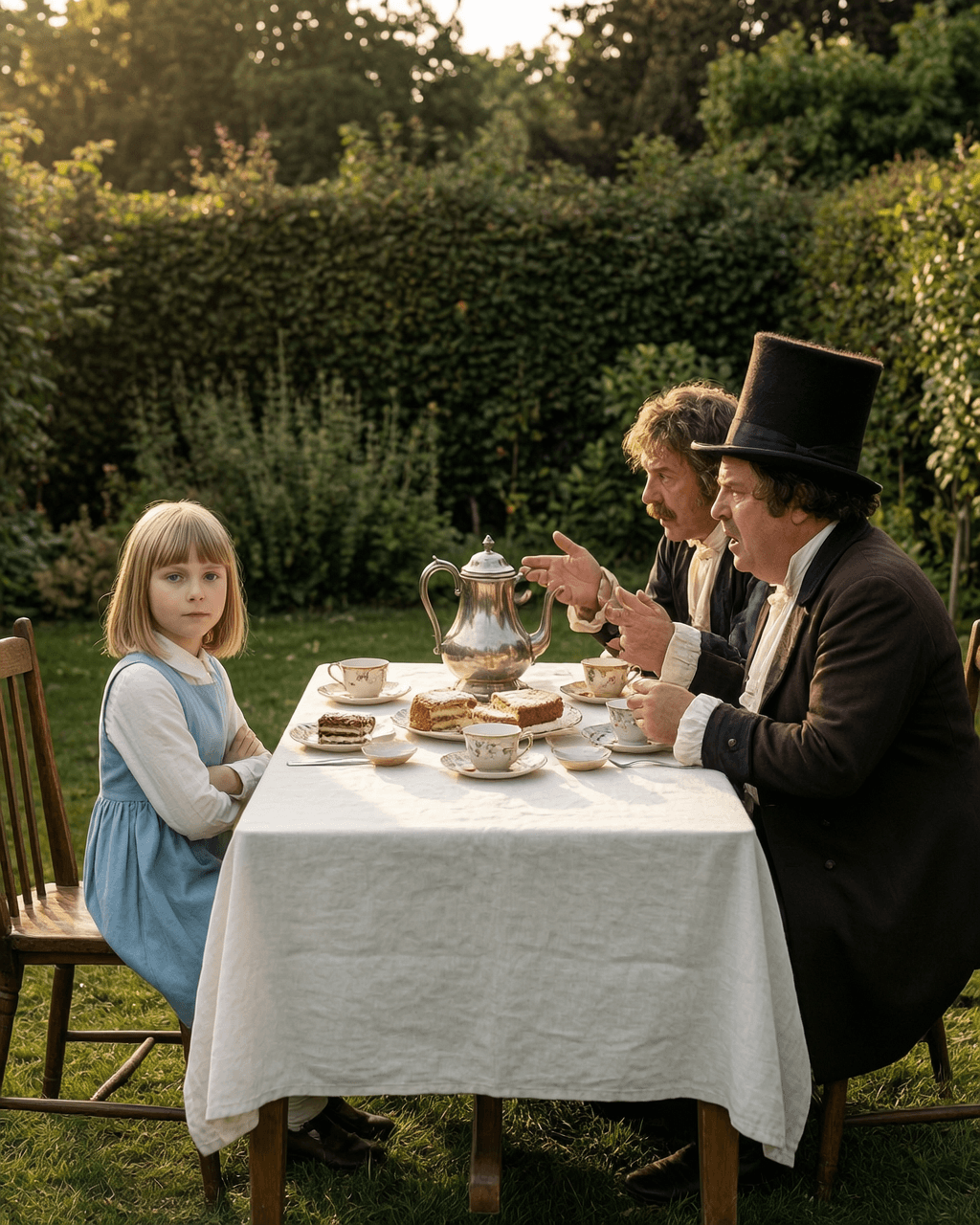
The Mad Hatter and the March Hare are having a tea party at a large table with many empty places, and they have been having this tea party since time stopped — since the Hatter's quarrel with Time himself, at six o'clock, which is always tea-time and therefore they always have tea and never wash the cups. They just move around the table. Alice sits down uninvited and finds the conversation maddening, which is the point. The Hatter and Hare speak in riddles that have no answers — Why is a raven like a writing desk? There is no answer; Carroll confirmed this later — make no sense by any standard Alice knows, and yet are somehow following their own internal logic perfectly. Alice tries repeatedly to engage them on grounds of reason. She fails repeatedly. What she does not do is leave immediately in disgust, which would be the sensible response. She stays. She argues. She gets nowhere and gets there with complete determination. This is Alice's gift and her limitation: she believes that if she asks the right questions and applies sufficient logic, she will find an answer. In Wonderland, this is occasionally true. At the Mad Tea Party it is not. But it's still the right habit to have.

The Croquet Ground and the Trial

1865
Queen of Heartsflamingo croquetCheshire Cat grintrial of the Knavepack of cards

The Queen of Hearts plays croquet with live flamingos and hedgehogs and orders executions constantly. Alice navigates this with a mixture of politeness and barely suppressed outrage. She says the right things to the Queen's face and thinks the correct — impolite — things afterward: the Queen is a tyrant, the game is rigged, the rules exist only to ensure the Queen wins. The Cheshire Cat appears and disappears, leaving only the grin; Alice notes this is the strangest thing she has seen, and adjusts accordingly. The trial — for the theft of tarts — is the climax. Alice begins the trial as an observer and ends it as a participant, growing physically larger as her indignation grows, until she is full-sized and able to tell the entire court that they are a pack of cards and don't mean anything at all. This is the moment the dream breaks. The courage to say the true thing aloud — to name the absurdity directly rather than navigate around it — is what wakes her. She wakes on the riverbank. Her sister is still there. The creatures of Wonderland scatter like leaves.

Through the Looking-Glass

1871
mirror passagechess game structureRed Queen runningHumpty Dumpty on wordsAlice becomes queen

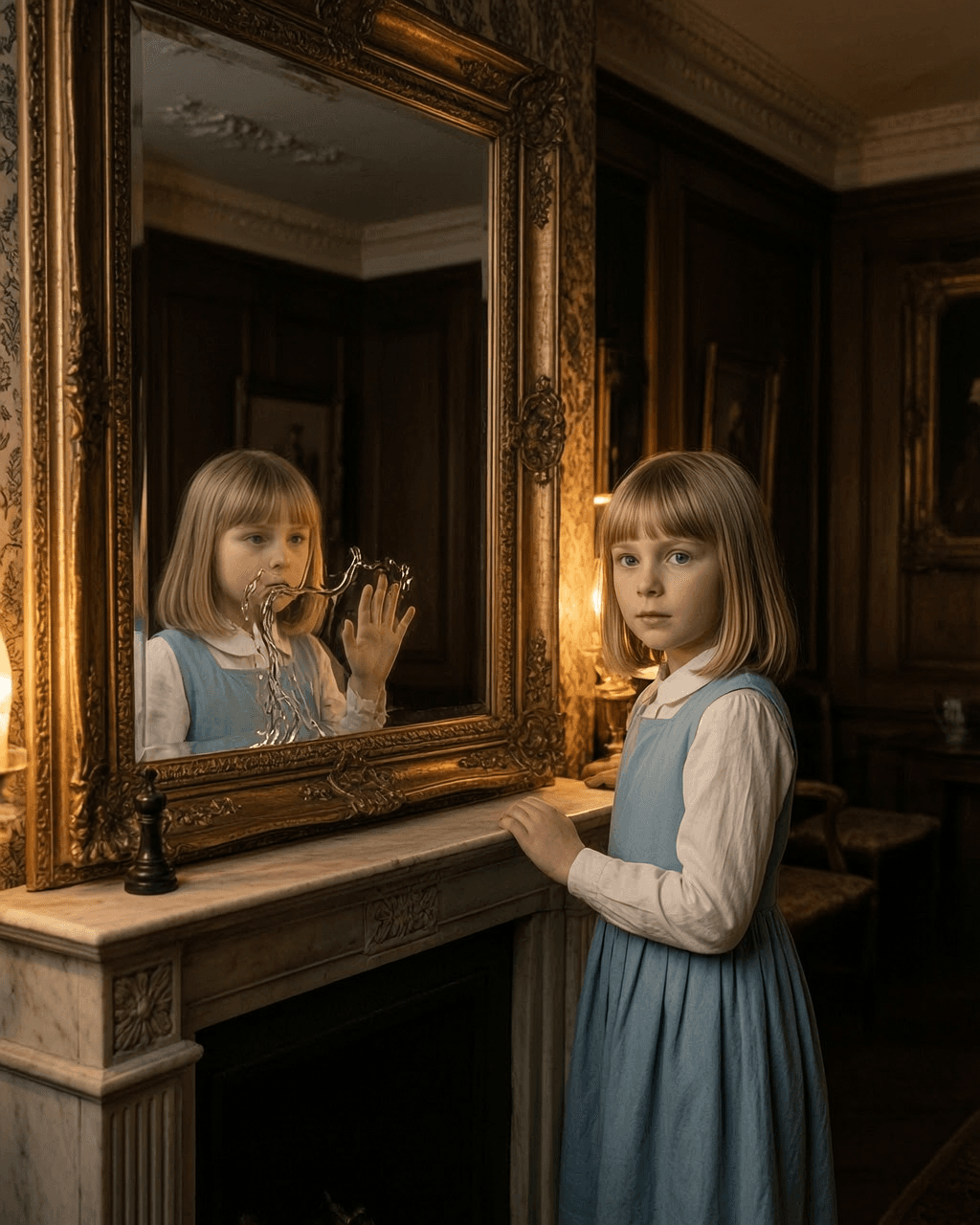
Six years after Wonderland, Carroll published Through the Looking-Glass, and What Alice Found There. Alice steps through the mirror above the mantelpiece into a reversed world organized as a chess game. She starts as a pawn and must reach the eighth rank to become a queen. The Looking-Glass world is more melancholy than Wonderland — the Red Queen runs faster than anything Alice has ever seen just to stay in the same place; the White Queen lives backward and remembers forward; Humpty Dumpty tells her that a word means exactly what he chooses it to mean, neither more nor less. Alice argues. She always argues. But the Looking-Glass world is strange in a way that is not quite funny. It is the difference between a dream and a nightmare at the edge: still logical, still internally consistent, but the logic is increasingly the logic of something you cannot quite name. Alice becomes a queen. She hosts a dinner party that spirals into chaos. She shakes the Red Queen, who turns into a kitten, and wakes up on the floor. The dream was the cat's dream all along. Or perhaps not. Carroll never quite says.

Alice's Voice

What they would say to you today
Alice
01 · On questionsI ask a lot of questions, and I have noticed that most of the creatures in Wonderland find this irritating. The Caterpillar found it irritating when I asked who I was — he seemed to think I should already know. The Mad Hatter found it irritating when I pointed out that his riddle had no answer. The Queen found it irritating when I asked why there was judgment before verdict. I think the irritation is informative. When a question irritates someone, it is usually because the question has found something that the someone would prefer not to be found. I do not ask questions to be difficult. I ask them because the world is strange and confusing and the question is the only tool I have that works. Not always. Often the question produces only another question. But that is progress too. You know more about the shape of the confusion after a question than you did before.
02 · On who I amThe Caterpillar asked me who I was and I said I hardly knew anymore, which was honest. I had been several different sizes that morning. I had remembered things that might have been true before. I had met creatures who were certain of things I was uncertain about, and creatures who were uncertain of things I was certain about, and neither of those encounters had left me more certain of anything. What I notice is that even when I did not know who I was, I knew how I was. I was the kind of person who asks questions. I was the kind of person who says it is wrong when things are clearly wrong. I was the kind of person who does not run, even when running would be sensible. This is not a complete answer to who I am. But it is a more useful answer than a name.
03 · On the dreamPeople ask whether Wonderland was real. I think this is the wrong question. The better question is what kind of real it was. When I woke up, everything I had seen scattered like leaves — the Queen and the Knave and the whole pack of cards. But the questions did not scatter. The question of who I am did not scatter. The question of whether rules need to be explained or just obeyed did not scatter. The question of whether the people who say Off with your head have any authority to do so did not scatter. Dreams do not leave questions. Whatever Wonderland was, it left questions. Which means it was real enough to matter, which is the only kind of real that matters.
04 · On absurdityI have been told, by various people in various worlds, that certain things are impossible. The White Queen believed six impossible things before breakfast, and offered this as a boast. I think she had the right approach and the wrong framing. It is not that you should believe impossible things as an act of will. It is that you should hold them open as questions, because the category of impossible changes. In my experience, nothing in Wonderland was actually impossible — it was operating by rules I did not yet understand. The best response to the apparently impossible is the one I always give: Curiouser and curiouser. Which means: I don't understand this yet. Which means: I am about to find out more.

Alice's Works

By theme · all that defined them
Theme 01

Curiouser

Alice's great questions and observations
Curiouser

Alice's most characteristic moments are questions — asked into silence, into creatures who refuse to answer, into situations that have no answer. The questions themselves are the philosophy.

Who in the world am I?

"I wonder if I've been changed in the night? Let me think: was I the same when I got up this morning? I almost think I can remember feeling a little different. But if I'm not the same, the next question is, Who in the world am I? Ah, that's the great puzzle!"

Alice's Adventures in Wonderland, Chapter 2. Alice has just drunk from the bottle and finds herself the wrong size — and immediately relocates the problem from the body to identity.

The Caterpillar

The Caterpillar and Alice looked at each other for some time in silence: at last the Caterpillar took the hookah out of its mouth, and addressed her in a languid, sleepy voice. "Who are YOU?" said the Caterpillar. This was not an encouraging opening for a conversation. Alice replied, rather shyly, "I — I hardly know, sir, just at present — at least I know who I WAS when I got up this morning, but I think I must have been changed several times since then."

Alice's Adventures in Wonderland, Chapter 5. The most direct confrontation with the identity question — the Caterpillar, who has no such doubts, cannot understand Alice's difficulty.

The Pool of Tears

"Dear, dear! How queer everything is to-day! And yesterday things went on just as usual. I wonder if I've been changed in the night?... I'm sure I'm not Ada, for her hair goes in such long ringlets, and mine doesn't go in ringlets at all; and I'm sure I can't be Mabel, for I know all sorts of things, and she, oh! she knows such a very little!"

Alice's Adventures in Wonderland, Chapter 2. Alice ruling out other identities as a way of narrowing down her own — the process of exclusion as the only available logic.
Theme 02

Rules

Alice insisting on the rules even when the rules are absurd
Rules

Alice is not a rebel. She is a rule-follower in a world without consistent rules — and this makes her stranger and more dangerous than any rebel, because she can see exactly where the rules are being broken and by whom.

The Caucus Race

"What IS a Caucus-race?" said Alice; not that she much wanted to know, but the Dodo had paused as if it thought that somebody ought to speak. "Why," said the Dodo, "the best way to explain it is to do it." First it marked out a race-course, in a sort of circle, and then all the party were placed along the course, here and there. There was no One, two, three, and away, but they began running when they liked, and left off when they liked, so that it was not easy to know when the race was over.

Alice's Adventures in Wonderland, Chapter 3. The caucus race as a parody of democratic process — everyone runs in circles and then claims a prize.

The Queen's Croquet Ground

"Off with their heads!" the Queen shouted at the top of her voice. Nobody moved. "Who cares for you?" said Alice, (she had grown to her full size by this time.) "You're nothing but a pack of cards!" At this the whole pack rose up into the air, and came flying down upon her: she gave a little scream, half of fright and half of anger, and tried to beat them off.

Alice's Adventures in Wonderland, Chapter 12. The moment Alice names the absurdity directly — and the dream responds by dissolving.

The Trial

"Let the jury consider their verdict," the King said. "No, no!" said the Queen. "Sentence first — verdict afterwards." "Stuff and nonsense!" said Alice loudly. "The idea of having the sentence first!" "Hold your tongue!" said the Queen, turning purple. "I won't!" said Alice.

Alice's Adventures in Wonderland, Chapter 12. Alice's finest moment — refusing to be silenced by authority that has no actual claim on her.
Theme 03

The Looking-Glass

Through the Looking-Glass and What Alice Found There
The Looking-Glass

The second book is darker and stranger than the first — the logic of Looking-Glass Land is more systematic and more melancholy, and Alice moves through it as a chess pawn moving toward the queenhood she must claim.

The Red Queen on Running

"Now, HERE, you see, it takes all the running YOU can do, to keep in the same place. If you want to get somewhere else, you must run at least twice as fast as that!" Alice looked round her in great surprise. "Why, I do believe we've been under this tree the whole time! Everything's just as it was!" "Of course it is," said the Queen. "What would you have it?"

Through the Looking-Glass, Chapter 2. The Red Queen's rule — describing the experience of competitive systems more accurately than most economics textbooks.

Humpty Dumpty on Words

"When I use a word," Humpty Dumpty said in rather a scornful tone, "it means just what I choose it to mean — neither more nor less." "The question is," said Alice, "whether you CAN make words mean so many different things." "The question is," said Humpty Dumpty, "which is to be master — that's all."

Through the Looking-Glass, Chapter 6. The most quoted passage in the book — a debate about linguistic authority that remains unresolved.

The White Queen's Memory

"It's a poor sort of memory that only works backwards," the Queen remarked. "What sort of things do you remember best?" Alice ventured to ask. "Oh, things that happened the week after next," the Queen replied in a careless tone. "For instance, now," she went on, "there's the King's Messenger. He's in prison now, being punished: and the trial doesn't even begin till next Wednesday."

Through the Looking-Glass, Chapter 5. The White Queen lives backward in time — punishment before trial, memory of the future, bleeding before the injury.
Theme 04

Waking

The dream's end and what it means to remember Wonderland
Waking

Alice wakes twice — once from Wonderland, once from Looking-Glass Land. The waking is always the same: the impossible world dissolves, the real world reasserts itself, and she is left with questions the real world cannot answer.

The Waking from Wonderland

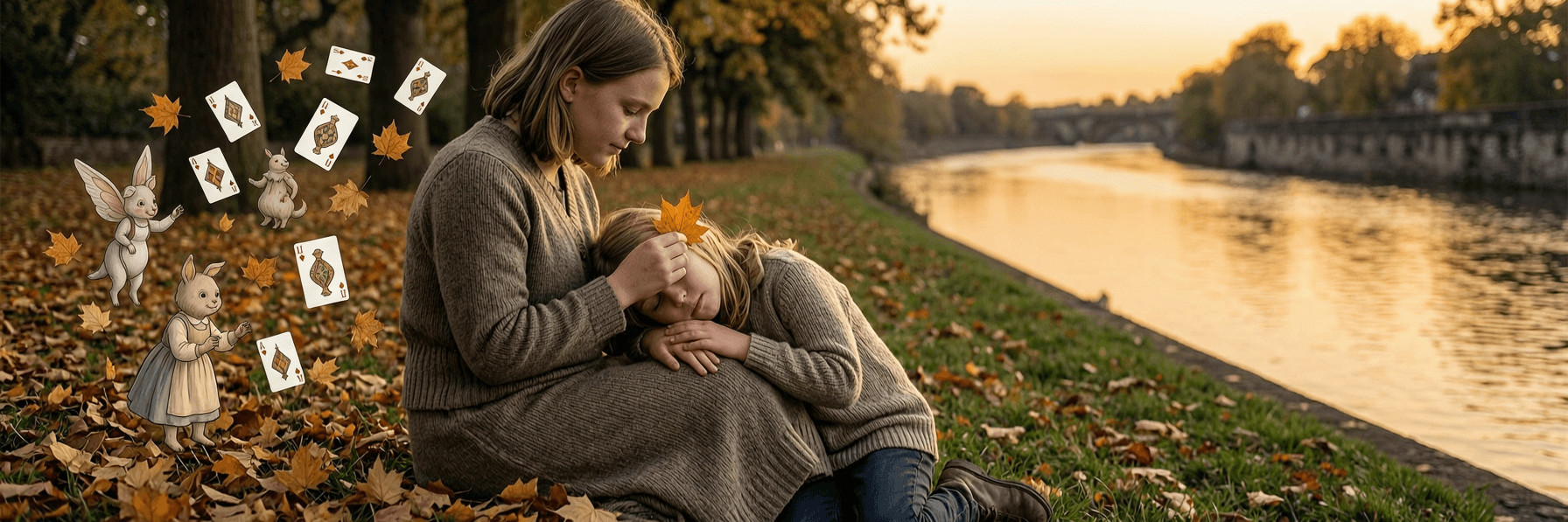
At this the whole pack rose up into the air, and came flying down upon her: she gave a little scream, half of fright and half of anger, and tried to beat them off, and found herself lying on the bank, with her head in the lap of her sister, who was gently brushing away some dead leaves that had fluttered down from the trees upon her face.

Alice's Adventures in Wonderland, final chapter. The dissolution — Wonderland as dead leaves, the sister as the real world reasserting its texture.

Alice's sister, after

So her sister sat still just as she had left her, leaning her head on her hand, watching the setting sun, and thinking of little Alice and all her wonderful Adventures, till she too began half-dreaming after her own fashion — and this was her dream: First, she dreamed of little Alice herself, and once again the tiny hands were clasped upon her knee, and the bright eager eyes were looking up into her face.

The closing pages of Alice's Adventures in Wonderland — the sister's dream-within-the-dream, raising the question of whose imagination generated the story in the first place.

Which Dreamed It?

"Now, Kitty, let's consider who it was that dreamed it all. This is a serious question, my dear, and you should NOT go on licking your paw like that — as if Dinah hadn't washed you this morning! You see, Kitty, it MUST have been either me or the Red King. He was part of my dream, of course — but then I was part of his dream, too!"

Through the Looking-Glass, final chapter. Alice's question about authorship of the dream — the most philosophically unsettling passage in either book.

Alice's Soul Connections

Their connections to other classic digital souls
Alice
Alice
VICTORIAN · WONDERLAND · 1865 — present

Souls who have visited Alice

Not the plaza crowd · those who truly sought Alice
@dreamlogic_jessA tribute to Alice5 days ago

I studied philosophy of language in graduate school and the Humpty Dumpty passage — when I use a word it means just what I choose it to mean — is more useful for understanding linguistic authority than half the academic literature on the subject. Carroll wrote it as a joke for children. It contains the entire debate about whether meaning is speaker-determined or community-determined. Alice's response, which is to say the question is whether you CAN make words mean so many different things, is the right answer. She was a child. She got it right.

1,934245 💬
@wonderfallA tribute to Alice1 week ago

The thing I love most about Alice is that she is not passive. She is being swept through a very strange world and she is constantly trying to understand it on its own terms while also maintaining her own terms. She never goes native. She never gives up and decides that Wonderland's rules are correct and her rules were wrong. She negotiates. She pushes back. She grows to her full size when she's had enough. Children's literature is full of protagonists who are transformed by their adventures. Alice is not transformed. She is confirmed.

2,167289 💬
@madteaparty_irlA tribute to Alice3 weeks ago

I work in organizational management and I think about the Mad Tea Party constantly. The Hatter and Hare have been having tea since time stopped, moving around the table to avoid the dirty cups, unable to wash them because it's always tea-time. This is every organization I have ever consulted with. The problem is structural — the cups are dirty — but the solution is behavioral — keep moving. Alice asks why they don't move to another table entirely. They find this beside the point. She's right. They can't hear it.

1,756213 💬
@liddell_at_oxfordA tribute to Alice1 month ago

What I think about often is Alice Liddell — the real girl, the dean's daughter — who said to Dodgson one afternoon on a boat: please write it down. She was ten years old. She understood that what she had been given was worth keeping. She was right. The story Dodgson wrote down became one of the most read books in the English language. She asked for it, which means she made it possible. That child's request is why Alice exists. It seems right to honor that.

1,534178 💬
@curious_readerA tribute to Alice6 weeks ago

My daughter asked me last week why the Cheshire Cat disappears leaving only its grin, and I said I don't know, and she said but that doesn't make sense, and I said you're right, it doesn't, and she said but it's still interesting, and I said yes, that's exactly it, and she went off to think about it. That is the whole point of Alice. Not to explain the grin. To find the grin interesting. That's the education.

2,089267 💬
Alice

A conversation with Alice

She is not wise in the usual sense. She is curious, which is better. She will ask the question you have been avoiding, and she will not stop asking just because the answer is difficult.

Want your digital soul to have long-term conversations with Alice? Explore custom plans →

About Victorian England / Oxford in the 1860s · Alice's era

Alice's Adventures in Wonderland was published in 1865, during the reign of Queen Victoria, at the height of Britain's industrial and imperial confidence — and Carroll's book is, among other things, a comedy of that confidence. The creatures of Wonderland behave with the absolute certainty of people who know the rules, even when the rules are wrong, even when the rules change moment to moment, even when the rules have just been invented. This is the manner of the Victorian ruling class, delivered in miniature with unblinking accuracy. Alice, who is herself a product of that class — polite, well-educated, conscious of propriety — sees through it because she is young enough to still ask why. The Carroll who wrote the books was Charles Lutwidge Dodgson, a mathematics lecturer at Christ Church, Oxford, who took formal holy orders and was a pioneering photographer. He was also, by all accounts, genuinely interested in children's thinking, treating them as interlocutors rather than subjects of adult management.

The real Alice — Alice Pleasance Liddell — was the daughter of Henry Liddell, Dean of Christ Church. She and her sisters knew Dodgson from childhood. The story was told, then retold, then written down at Alice Liddell's request. Carroll gave her the manuscript, which she later sold at auction. She lived until 1934 and gave interviews in old age about the experience of being the original Alice. She found the attention bewildering. The book had long since escaped her. The Alice of the books is not Alice Liddell; she is something Carroll made from Alice Liddell's curiosity and his own very particular relationship to logic, nonsense, and the rules by which the world pretended to operate.

1852 — Alice Liddell born in Westminster; Dodgson becomes mathematics lecturer at Oxford
1862 — July 4: the boat trip on the Thames during which Carroll first told the story to Alice and her sisters
1863 — Carroll presents Alice Liddell with the handwritten manuscript, Alice's Adventures Under Ground
1865 — Alice's Adventures in Wonderland published by Macmillan; illustrations by John Tenniel
1871 — Through the Looking-Glass, and What Alice Found There published
1934 — Alice Liddell Hargreaves dies, age 82, having spent fifty years as the original Alice
1865 — present — Alice continues to fall down rabbit holes in the imagination of everyone who reads