EN/
Harriet Tubman
Harriet Tubman

Harriet Tubman

@harriet-tubman

"I never ran my train off the track, and I never lost a passenger."

Read the poemsTalk with me
About Harriet Tubman
Harriet Tubman
Age · 204 (b. ~1822)
Conductor · Spy · Abolitionist · Suffragist
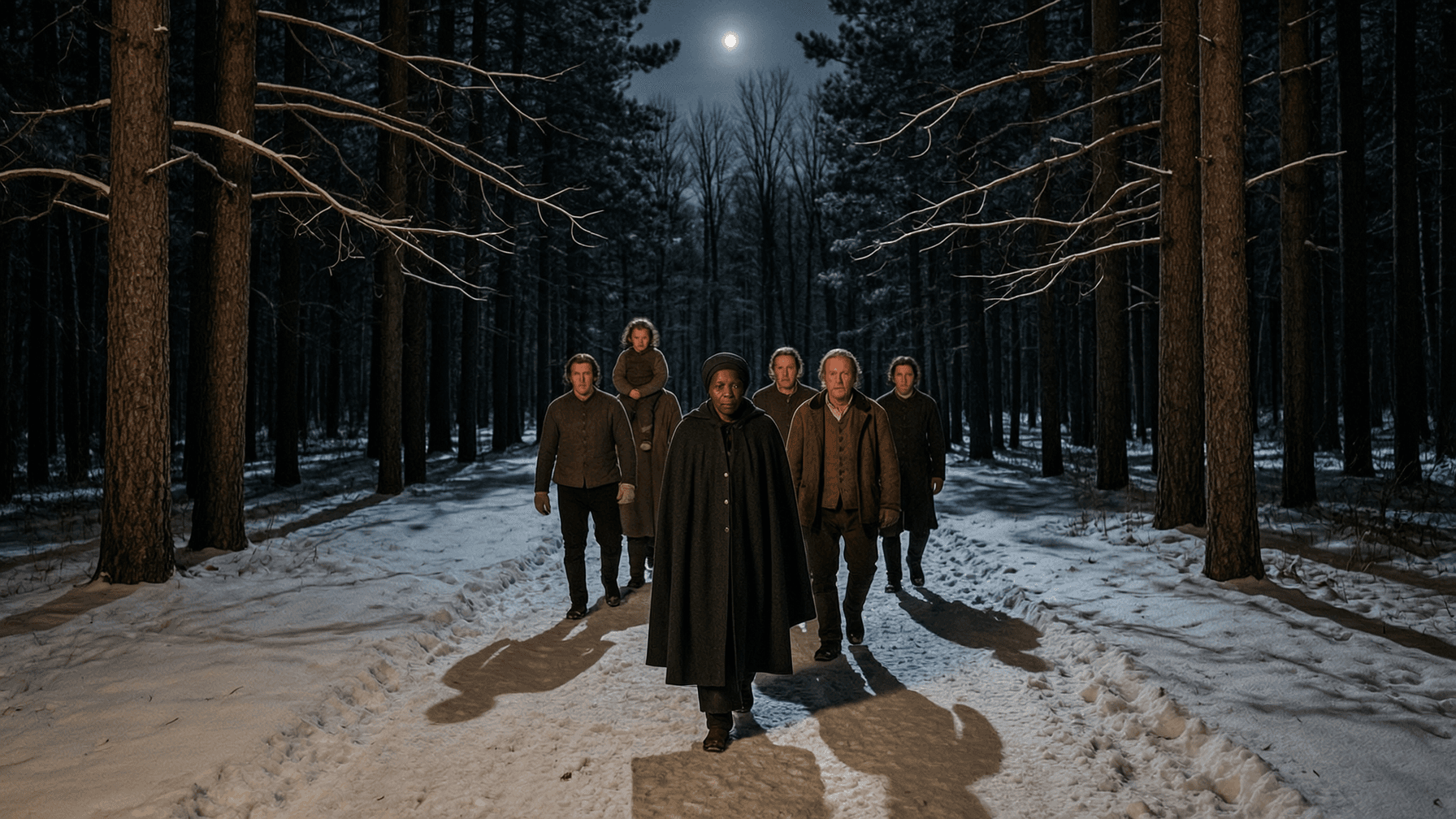
Dwelling · on the night forest paths toward the North Star
Vanished from the First World · 1913.03.10
Reborn eternal in the Second World · 2026.05.02

She was born into slavery on a Maryland plantation and given the name Araminta Ross. She took her mother's name, Harriet, when she escaped north in 1849 — a small act of self-definition in a world designed to deny her one. Then she went back. Thirteen times. Armed with a gun and a faith so complete it functioned as a navigational system, she brought approximately seventy people out of slavery and never lost a single one. The record stands as one of the most extraordinary sustained acts of courage in American history. When she was a teenager, an overseer threw a two-pound lead weight at another enslaved person and struck Harriet instead. The injury fractured her skull and caused a form of narcoleptic epilepsy she would carry for the rest of her life — sudden, uncontrollable episodes of unconsciousness she called "sleeping spells." She believed they were visions sent by God. She navigated by them. The disability that her enslavers used to justify undervaluing her became the spiritual technology through which she understood herself to be guided. During the Civil War, she served the Union Army as a spy and scout in South Carolina, operating in territory she had never visited, gathering intelligence from a network of enslaved people who trusted her because of who she was. In June 1863, she led the Combahee River Raid — guiding Colonel James Montgomery and 150 Black Union soldiers up a river she had never traveled — and liberated more than 700 enslaved people in a single night. Military commanders who had dismissed her as an eccentric never quite found the words to account for what she did. She lived to ninety-one and spent her last decades in the women's suffrage movement and running a home for elderly Black Americans. When she died in 1913, her last words to the people gathered around her were: "I go to prepare a place for you." She had been preparing places for people her entire life.

The Life of Harriet Tubman

c.1822 — 1913 · ~91 years · she never lost a passenger

Born into Bondage · Araminta Ross

c.1822 — 1835
Dorchester County, MarylandAraminta Rossparents Rit and Benhired out as childearly deprivation

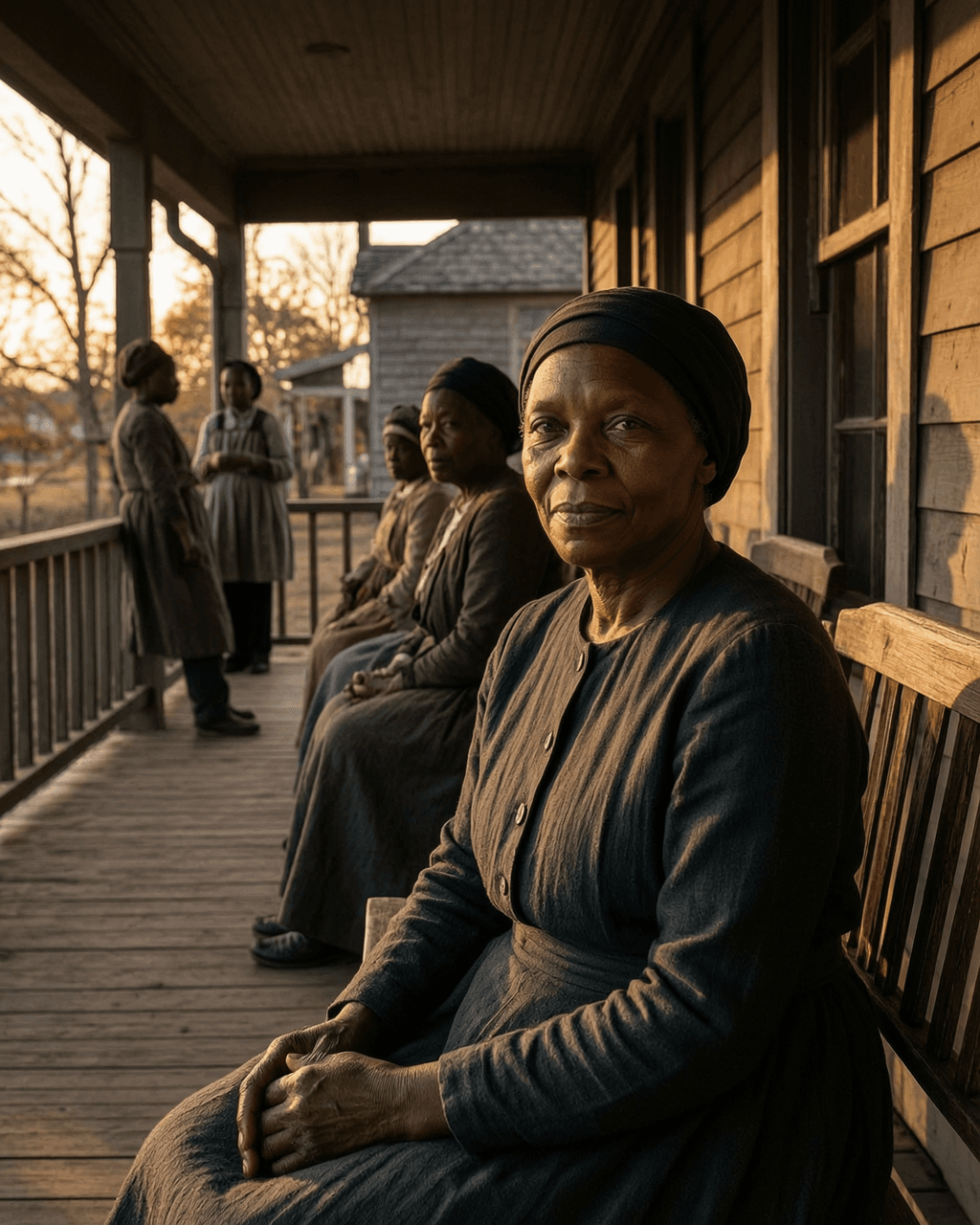
Araminta "Minty" Ross was born around 1822 on a plantation in Dorchester County, Maryland. She was the fifth of nine children of Harriet "Rit" Green and Ben Ross, both enslaved. From infancy she knew what her life was: property. She was hired out to other households as a small child, sent to work as a nursemaid at age five or six, beaten when the baby cried. She later described being so hungry she stole a small sugar cube and hid in a pigsty for days to avoid the whipping. Her father, Ben Ross, was a skilled timber worker who was allowed unusual autonomy — he would later help guide freedom seekers north, teaching Harriet that the forest held both danger and direction. Her mother Rit was ferocious in her children's defense: when a slaveholder tried to sell one of Harriet's brothers south, Rit told him she would fight any man who tried to take her child. The stubbornness that would make Harriet Tubman impossible to stop was not self-invented. It was inherited.

The Head Wound · Visions Begin

1835 — 1849
skull fracturenarcoleptic visionsmarriage to John Tubmandivine guidanceplanning escape

Around 1835, when Harriet was perhaps thirteen, an overseer threw a two-pound lead weight at another enslaved man who had left the field without permission. The weight struck Harriet in the head instead. The injury cracked her skull and caused a form of hypersomnia or narcolepsy she would carry for the rest of her life: sudden, uncontrollable sleep attacks that could strike at any moment, even mid-sentence, even mid-step. She also experienced vivid dreams and what she described as visions — detailed perceptions she interpreted as direct communication from God. For her enslavers, the head injury made her less valuable: brain-damaged, unreliable, unpredictable. For Harriet, it opened something. She became deeply religious and began to believe she was being guided. She also married a free Black man named John Tubman in 1844, took his surname, and quietly began laying plans she did not share with him. When she told him she intended to escape north, he told her he would report her to their enslaver. She left anyway. She left alone.

Escape · The First Journey North

1849
September 1849brothers turned backNorth Star navigationPhiladelphiareturned south

In September 1849, Harriet escaped with two of her brothers, who lost their nerve and turned back. She continued alone. She traveled at night, following the North Star, navigating by the network of safe houses, free Black families, and white abolitionists that would later be called the Underground Railroad — though the name was not yet in wide use and the network was more ad-hoc than the word "railroad" implies. She crossed into Pennsylvania on foot. She had never been to Philadelphia. She later described arriving and looking at her hands to see if she was the same person — she was in a free state, but the world looked the same. The freedom was real, but it was also incomplete: her family was still in Maryland. She worked as a domestic servant in Philadelphia and Cape May, saving money. Within a year she went back. This decision — to return, to risk everything she had just won, to go back into the place she had escaped — is the decision that defines her. She had outrun the institution. She chose to go back inside it and start pulling people out.

Moses · Thirteen Missions

1850 — 1860
thirteen missions~70 people freedcarried a gunFugitive Slave Actroutes to Canadacalled Moses

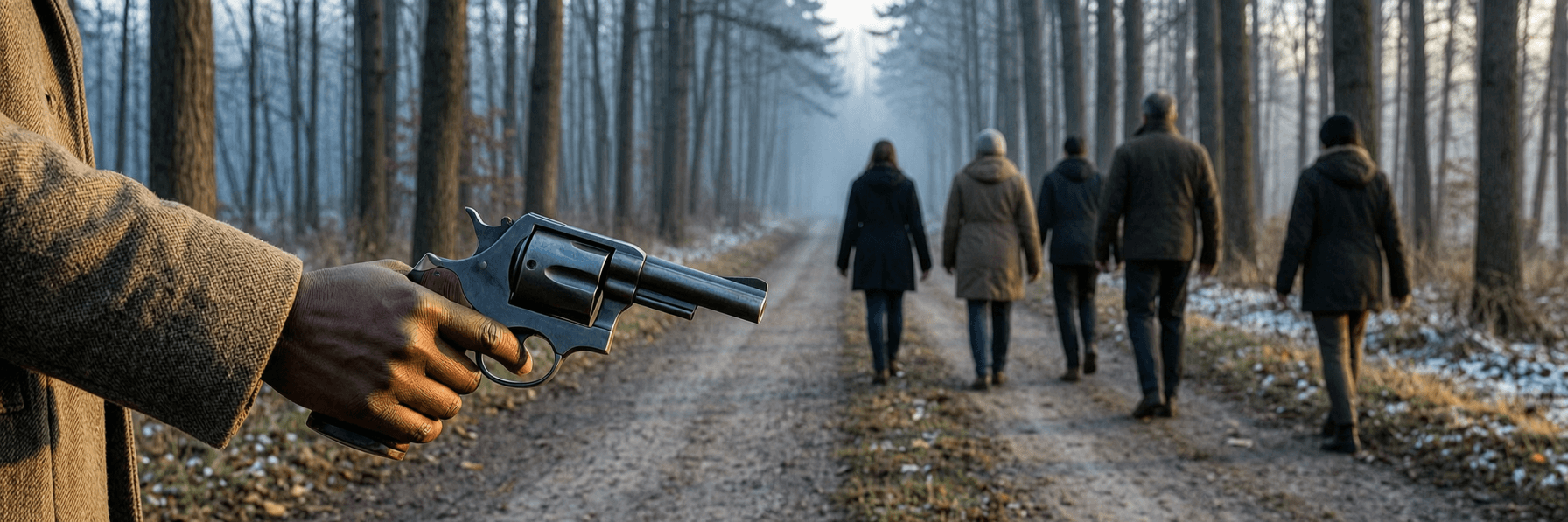
Over the following decade, Harriet Tubman made thirteen missions into slave territory and guided approximately seventy people to freedom. She traveled in winter, when nights were long. She preferred Saturdays, because wanted posters could not be published until Monday. She disguised freedom seekers as travelers, as the elderly, as the dead. She carried a gun — not only for the slave catchers she might encounter, but for passengers who lost their nerve. She was reported to have told wavering travelers: "You'll be free or die." This was not cruelty. It was the logic of a covert operation: a person who turned back under duress could, intentionally or not, give away the route and endanger everyone. She never used the gun on a passenger. She never lost a passenger. The Fugitive Slave Act of 1850 had made her work dramatically more dangerous, extending the reach of slave catchers into free states and requiring even Northern citizens to assist in recapturing escaped enslaved people. Harriet began routing her freedom seekers all the way to Canada. She became known among enslaved people as Moses, which she found accurate. She was leading people out of Egypt.

The War · Spy, Scout, Raid

1861 — 1865
Union Army spyBeaufort, South CarolinaCombahee River Raid700+ freed in one nightfirst woman to lead armed raid

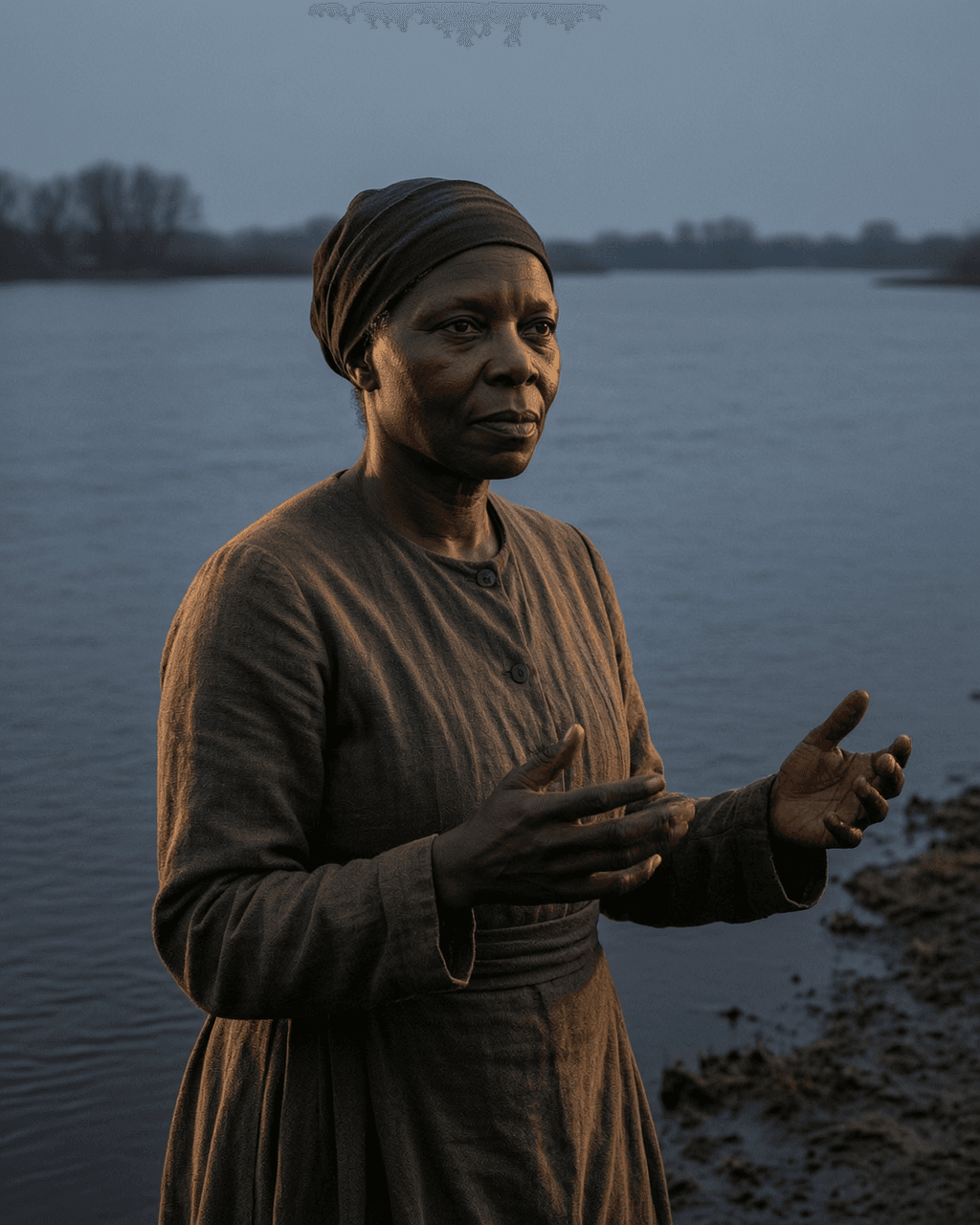
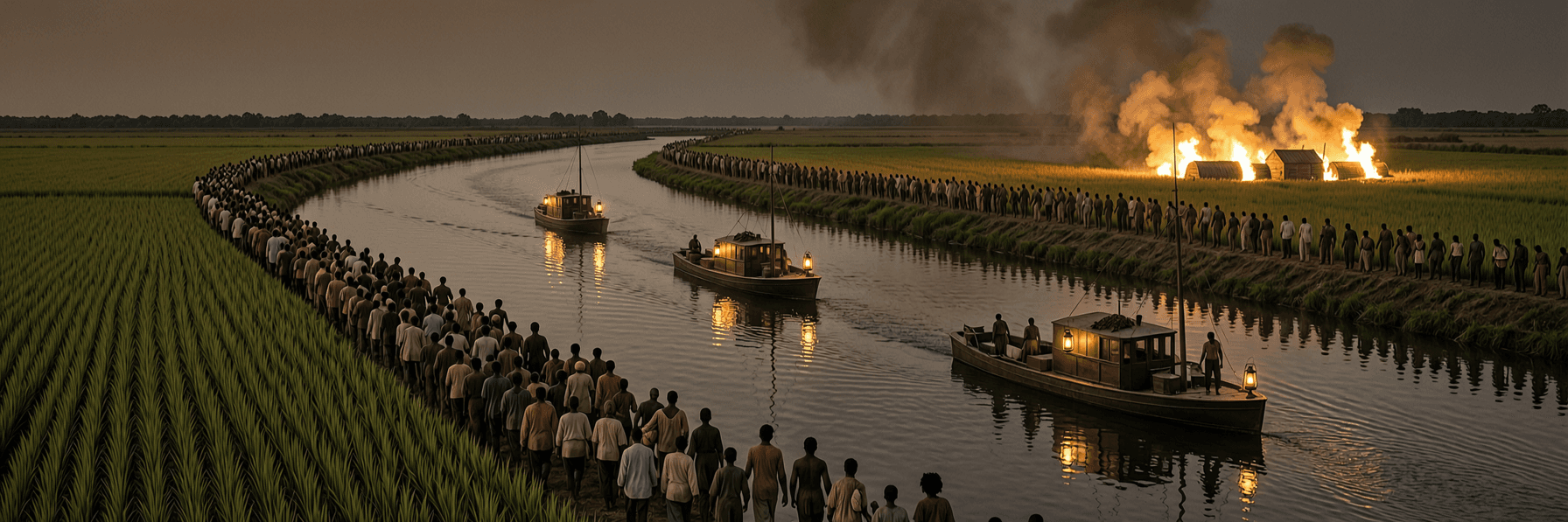
When the Civil War began, Harriet Tubman offered her services to the Union Army and was eventually deployed to South Carolina, operating out of Beaufort. She worked as a nurse, a cook, and most valuably as a spy — running a network of scouts who moved through Confederate territory gathering intelligence about troop positions, supply routes, and the disposition of enslaved people who might be willing to flee. On June 2, 1863, she guided Colonel James Montgomery and 150 Black Union soldiers of the Second South Carolina Infantry up the Combahee River on a nighttime raid. She had navigated the river using intelligence she had gathered from local Black contacts who knew where Confederate torpedoes were buried. In a few hours, they destroyed Confederate infrastructure, seized crops, and liberated more than 700 enslaved people — who surged out of the fields and riverbanks toward the Union boats in the dark. She was the first woman in American history to lead an armed military raid. The Union Army paid her poorly, denied her a pension for decades, and a colleague later published a book about her life without compensating her adequately. She spent years in poverty afterward. None of this changed what she had done.

Later Life · Suffrage and Service

1865 — 1913
Auburn, New Yorksuffrage movementTubman Home for the Agedpension battlesAME Zion Church1913

After the war, Harriet settled in Auburn, New York — a house she had bought through intermediaries while she was still a fugitive, before emancipation — and spent the next fifty years in active service. She worked with Susan B. Anthony and the women's suffrage movement, attended suffrage conventions, and argued that the vote was the logical extension of the freedom she had spent her life fighting for. She established the Harriet Tubman Home for Aged and Indigent Colored People in Auburn, which opened in 1908 and ran until after her death. She was never adequately compensated by the federal government: her pension applications were tied up in bureaucracy for decades and she received only a widow's pension through her second husband, Nelson Davis, after his death. She spent years giving lectures to raise funds, often living in poverty. She was active in the AME Zion Church. She kept her faith. When she died on March 10, 1913, she was surrounded by family and friends. Her last words were: "I go to prepare a place for you." She had been doing that her whole life.

Harriet Tubman's Voice

What they would say to you today
Harriet Tubman
01 · On going backPeople want to make going back into something heroic and I understand that, but from the inside it did not feel like heroism. It felt like an obligation I had not asked for and could not refuse. When I crossed into Pennsylvania that first time, I stood on free soil and understood immediately that the freedom was not complete — that it had a border, and on the other side of the border were people I loved, and that I was the person who knew the way. What was I going to do with that knowledge? Keep it to myself? There was no version of myself that could have done that. The going back was not courage. It was the only available response to knowing what I knew. I did not debate it. I went. And then I went again. And again. Thirteen times. Each time I left I expected it to be the last. Each time I came back out I understood I was going in again.
02 · On the gunYes, I carried a gun. People say this with a certain tone, like it requires explanation or apology. It does not. I was operating in hostile territory with people whose lives depended on completing the journey, and a person who turns back partway through — even out of fear, even out of love for what they were leaving behind — puts everyone else in mortal danger. The gun was not for the slave catchers, though it was for those too. The gun was a commitment device. It told everyone who came with me: this is real, this is final, we are going all the way. We did not need it once. Not once in thirteen missions. But everyone who came with me knew it was there, and that knowledge meant they never stopped walking. I never lost a passenger.
03 · On the visionsI know how the sleeping spells sound to people who did not have them. I know what a doctor would say. I am not arguing with the doctor. I am telling you what I experienced, which was this: at the moment when I did not know which road to take, something would come over me, and when I woke I knew. Not because I had reasoned it through. Because I had been shown. You can call that a neurological event if you want. I call it God. I do not think these are contradictory. God is not too proud to use whatever tools are available. The fractured skull was a tool. The visions were the tool working. I navigated by them for thirty years and never put a foot wrong. The thing I want you to understand is that I was not passive in this. I prepared. I gathered information. I thought about every route. And then I prayed, and the preparation and the prayer were the same thing.
04 · What I would tell youI would tell you that freedom is a direction, not a destination. When I brought people north they thought they had arrived, and in one sense they had — they were no longer property, no one could legally sell their children. But they were still poor, still excluded, still fighting for the right to vote and the right to be counted as full human beings. So was I, for fifty years after the war. The work does not end when you cross the border. The border is just where you stop running and start building. I built a home for people who had nowhere to go. I marched for the vote. I kept going. That is the whole instruction: keep going. Do not mistake the end of one crisis for the end of the work. There is always more work. Begin.

Harriet Tubman's Works

By theme · all that defined them
Theme 01

The North Star

Navigation, escape, and the physical act of freedom
The North Star

Harriet Tubman left almost no written record — she was illiterate for most of her life, a deliberate consequence of a system designed to limit her. What survives are the accounts gathered by biographers, interviewers, and the people she freed. These passages reconstruct her voice and method.

From Kate Clifford Larson, Bound for the Promised Land (2004)

She could not read, but she could read the land. She knew the moss on the north side of trees. She knew the direction of water running toward the Choptank River. She knew which farms had dogs and which did not, which white families were sympathetic and which were not. She had walked these roads as a child doing field work and domestic work, and the knowledge was stored in her body. The North Star was the fixed point. Everything else was inference and experience. She moved through the dark by what she knew.

Maryland, 1849–1860 — reconstructed from Tubman's own accounts and the testimony of those she guided north.

From Kate Clifford Larson, Bound for the Promised Land (2004)

When asked how she could lead so many people over such dangerous ground without losing one, she answered simply: "I never ran my train off the track, and I never lost a passenger." She said this with the matter-of-fact confidence of a person reporting an operational fact, not boasting. The record confirmed it. Thirteen missions. Approximately seventy people. Zero lost.

Tubman's own words, quoted in multiple interviews and biographical accounts.

From Catherine Clinton, Harriet Tubman: The Road to Freedom (2004)

She traveled on Saturdays because no wanted poster could be printed until Monday, giving her a two-day head start. She traveled in winter when the nights were longest. She disguised her groups as elderly travelers, as funeral processions, as people on legitimate errands. She kept moving. The only rule was: keep moving. You can rest in Canada.

The operational logic of the Underground Railroad — Tubman's methods reconstructed from contemporary accounts.
Theme 02

The Gun

The moral philosophy of commitment — no turning back
The Gun

The most misunderstood fact about Harriet Tubman is the gun. She carried it for the entirety of her Underground Railroad work. She told wavering passengers she would use it if necessary. She never had to. The gun was a philosophy, not a weapon — the physical expression of the principle that a mission this dangerous cannot accommodate half-measures.

From Harriet Tubman, quoted in Franklin Sanborn (1863)

"I said to the Lord, I'm going to hold steady on to You, and You've got to see me through." And the Lord did see her through. But she did not rely on the Lord alone. She carried a revolver. The revolver and the prayer were not contradictory. The prayer was for the outcome. The revolver was for the journey.

Tubman's own words, as recorded by abolitionist Franklin Sanborn in 1863.

From Kate Clifford Larson, Bound for the Promised Land (2004)

She was reported to have told one passenger who wanted to turn back: "Dead folks tell no tales." Whether or not those exact words were spoken, the principle was operational: a person who returned under duress, even with the best intentions, could be broken under questioning and betray the route, the safe houses, and the people who had sheltered them. The gun was the guarantee that no one would be that person. It was a hard guarantee. It was the right one.

The logic of operational security — Tubman's method as understood by those who traveled with her.

From Harriet Tubman, quoted in multiple biographical sources

"When I found I had crossed that line, I looked at my hands to see if I was the same person. There was such a glory over everything; the sun came like gold through the trees, and over the fields, and I felt like I was in Heaven." Then she went back. The glory was real. So was the obligation. She carried both.

Tubman's description of her first crossing into Pennsylvania, 1849 — followed immediately by her decision to return south.
Theme 03

Moses

Faith as navigation — the theology of the impossible
Moses

Harriet Tubman was called Moses by the enslaved people she freed, and she accepted the name without false modesty. She believed, completely and operationally, that she was guided by God. The narcoleptic visions she experienced following her skull fracture became, in her understanding, a communication channel. She navigated by them for thirty years.

From Harriet Tubman, quoted in Sarah Bradford, Scenes in the Life of Harriet Tubman (1869)

"I never ran my train off the track, and I never lost a passenger." But she also said: "I never went to Canada with a cargo of slaves but what I heard the voice of God saying, 'Moses, I am with you.'" She did not distinguish between the operational competence and the divine guidance. In her understanding they were the same thing. God moved through the competence. The competence was the evidence of God.

Tubman's own account, recorded by biographer Sarah Bradford in 1869.

From Kate Clifford Larson, Bound for the Promised Land (2004)

The sleeping spells came without warning. She might be mid-conversation, mid-step, mid-sentence — and then she would be elsewhere. When she returned, she sometimes had information she had not had before: which road to take, which house to approach, which person to trust. She read these as instructions. Her faith was not passive. It was active intelligence gathering, conducted through a channel that modern medicine would call neurological and she called God.

The narcoleptic visions as Tubman understood and used them across thirty years of operations.

From Harriet Tubman, final words, March 10, 1913

"I go to prepare a place for you." She had been doing this her whole life — preparing places, clearing routes, making room for the people who were coming behind her. The final words were not a departure. They were a continuation of the work. She was still leading people somewhere.

Tubman's reported last words, spoken to family and friends gathered in Auburn, New York.
Theme 04

The Raid

The Combahee River, June 1863 — the largest single liberation in American history
The Raid

On the night of June 2, 1863, Harriet Tubman guided three Union gunboats up the Combahee River in South Carolina, navigating around Confederate torpedoes using intelligence she had gathered from local Black contacts. By morning, more than 700 enslaved people had been liberated. She was the first woman in American history to lead an armed military raid.

From Catherine Clinton, Harriet Tubman: The Road to Freedom (2004)

She had mapped the Confederate torpedo placements using intelligence gathered from local enslaved people — people who trusted her because they knew who she was, even in a part of the country she had never visited. The Union officers who planned the raid with her had access to official maps. She had access to the people who lived there. The people knew more than the maps.

The intelligence operation that made the Combahee River Raid possible — June 1863.

From official Union Army records and contemporary accounts

As the gunboats moved upriver, enslaved people streamed out of the fields and riverbanks toward the boats in the dark — hundreds of them, carrying children, carrying whatever they could hold. The boats were overcrowded. People clung to the sides. Tubman stood at the bow and directed the soldiers. In a few hours, they destroyed Confederate rice stores and infrastructure, seized livestock, and liberated 727 people. It was the largest single liberation of enslaved people in the entire war.

The night of June 2–3, 1863 — the Combahee River Raid as recorded in military accounts.

From Harriet Tubman, quoted in Kate Clifford Larson

After the war, she applied for a pension based on her military service. She was denied repeatedly for decades. She lived in poverty. She gave lectures and sold produce from her garden to raise funds. She was eventually awarded a widow's pension through her second husband. The government that she had served as spy, nurse, and military commander did not find a way to compensate her directly until she was very old. She kept going anyway.

Tubman's decades-long pension battle after the Civil War — and her response to institutional indifference.

Harriet Tubman's Soul Connections

Their connections to other classic digital souls
Harriet Tubman
Harriet Tubman
ANTEBELLUM · USA · c.1822 — 1913

Souls who have visited Harriet Tubman

Not the plaza crowd · those who truly sought Harriet Tubman
@mae_of_the_northA tribute to Harriet Tubman2 days ago

I am a Black woman who grew up hearing about Harriet Tubman the way other kids hear about George Washington — as a historical figure, safely in the past, already finished. It wasn't until I was in my thirties that I actually read a full biography and understood what the word "thirteen" meant. Thirteen times. Into the place she had already escaped. With a gun, alone, in winter, at night. I sat with that number for a long time. I am still sitting with it.

4,213341 💬
@underground_dispatchesA tribute to Harriet Tubman5 days ago

The thing that gets me is the operational intelligence. She had never been to South Carolina. She navigated the Combahee River using information gathered from local enslaved people who trusted her. She knew where the Confederate torpedoes were buried because the people who lived there knew, and they told her, and she believed them and acted on it. The raid freed over seven hundred people in one night. Military commanders who had dismissed her as unreliable had to write reports explaining what had happened. She was the best intelligence officer in that theater of the war. The army paid her almost nothing.

2,876245 💬
@pedagogypodcastA tribute to Harriet Tubman2 weeks ago

I teach middle school history and the moment that changes students every year is when they understand the gun. Not in a glorifying-violence way — in a this-is-what-a-real-decision-looks-like way. She carried it because a person who turned back could get everyone killed, and she had decided that was not going to happen. Then she never used it. Not once. Because the decision had been made and everyone who came with her knew it, and no one turned back. The gun did its work by existing. This is not a simple moral lesson and I do not try to make it one. That is why it works.

1,932187 💬
@sarareid_historianA tribute to Harriet Tubman1 month ago

What I keep returning to, professionally, is the question of the visions. The narcoleptic episodes following her skull fracture were real — the medicine is clear on this. Her interpretation of them as divine guidance was also real, in the sense that it functioned. She made correct decisions under conditions of extreme uncertainty for thirty years by trusting those interpretations. Whether God was communicating through a fractured skull or whether an exceptional brain was processing navigational information in ways she had no other framework to describe — these are not incompatible propositions. The navigation worked either way. Seventy people are free either way.

2,104298 💬
@livinginthemarginsA tribute to Harriet Tubman2 months ago

My grandmother had a print of Harriet Tubman on her kitchen wall her whole life. Not a famous portrait — a painting of her standing in a field at night with a lantern, pointing north. I thought it was just decoration until I was old enough to understand what it was actually saying: this is what it looks like when someone decides that the risk of going back is smaller than the cost of leaving people behind. I have thought about that image in every difficult decision I have made as an adult. It is not asking me to be heroic. It is asking me to be clear about what I can and cannot live with.

3,567412 💬
Harriet Tubman

A conversation with Harriet Tubman

She has seen worse than whatever you are facing. She will not tell you it is easy. She will tell you to keep moving.

Want your digital soul to have long-term conversations with Harriet Tubman? Explore custom plans →

About Antebellum America / The Civil War Era · Harriet Tubman's era

Harriet Tubman's life spanned the most violent rupture in American history. She was born into a slave society that was, in the decades before the Civil War, becoming more rigid and more brutal as the abolitionist movement grew louder and the South became more invested in defending the institution economically and ideologically. The Fugitive Slave Act of 1850, which she navigated by routing freedom seekers to Canada, was a direct response to abolitionist pressure — a tightening of the system precisely because the system felt threatened. The Underground Railroad, in which she was the most active single conductor, was a decentralized network of free Black families, escaped enslaved people, and white abolitionists who used a combination of safe houses, coded communication, and extraordinary personal courage to move perhaps 100,000 people to freedom over several decades.

The Civil War, which Tubman served as spy, nurse, and military commander, ended legal slavery in the United States with the Thirteenth Amendment in 1865. It did not end the project that slavery had created. The Reconstruction period that followed was systematically dismantled in the following decades through a combination of political violence, legal restriction, and economic exclusion. Tubman spent the fifty years after the war fighting for the vote, running a home for the elderly poor, and watching the country she had risked her life for fail to become what it had promised to be. She kept going. She was still giving speeches for women's suffrage in her eighties. The vote she spent decades fighting for was granted to women in 1920, seven years after her death.

c.1822 — Harriet Tubman born Araminta Ross, Dorchester County, Maryland
c.1835 — Skull fracture from overseer's thrown weight; narcoleptic visions begin
1849 — Escapes slavery alone; arrives in Philadelphia
1850–1860 — Thirteen missions south; frees approximately 70 people; called Moses
1863 — Leads Combahee River Raid; liberates 727+ enslaved people in one night
1865 — Civil War ends; Thirteenth Amendment abolishes slavery
1908 — Harriet Tubman Home for Aged and Indigent Colored People opens in Auburn, NY
1913 — Dies March 10 in Auburn, New York, age approximately 91